Colorado living: State symbols & emblems, part 1
In recognition of 2026 marking 150 years of Colorado statehood, this segment will highlight the state’s many official emblems and symbols in a multipart series. This month looks at Colorado’s name and nickname, state motto, seal, flag, tartan, folk dance, songs, and summer and winter sports.
Colorado’s name comes from the Spanish for “colored red.” Congress chose it for the territory in 1861 and kept it when the territory became the 38th state in 1876. The state’s nickname is the “Centennial State,” from Colorado’s statehood coming in the nation’s centennial year. Another common nickname is “Colorful Colorado,” likely due to the state’s incredible scenery.
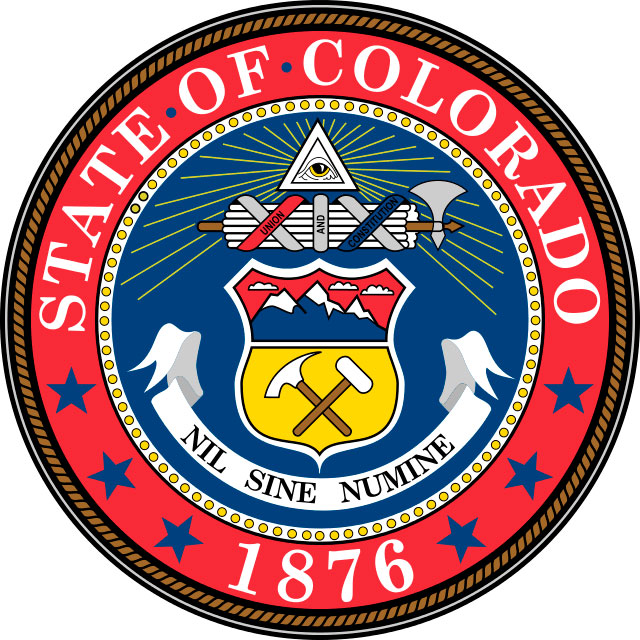
State Seal
The state’s motto is “Nil Sine Numine,” originally adopted as part of the Territorial Seal. The phrase means “Nothing without the Deity” in Latin, although sometimes it is translated as “Nothing without Providence.”
The motto appears on a banner on the circular Seal of the State of Colorado, which also includes the following symbols:
The eye of God within a triangle, with radiating gold rays.
A bundle of wooden rods—the Roman fasces—signifying a republican form of government. The bundle bound together symbolizes strength. The battle axe within the bundle symbolizes authority and leadership. A band that reads “Union and Constitution” circles the bundle.
A shield with three snowcapped mountains and clouds in its upper half and two miner’s tools in its lower half.
Surrounding the whole are the lettering “STATE OF COLORADO” and the year of statehood “1876,” separated from each other by six stars.
The state flag was adopted on June 5, 1911. The flag’s colors symbolize aspects of Colorado: blue skies, gold metals, white mountain snow and red soil. The precise red and blue on the flag—the same as those in the National flag—were stipulated in 1929, as well as the distance from the staff for the letter C and its diameter.

State Tartan
Colorado has an official state tartan, a patterned wool cloth, which was adopted in 1997. Its colors and symbology are cerulean blue for the clear Colorado skies, forest green for the state’s pine and spruce trees, lavender and white for the granite mountain peaks and the snow atop them, gold for the vast mineral resources that attracted miners, and red for the red sandstone soil that gave the area its name. Any resident or friend of Colorado may wear the state tartan, without regard to Celtic heritage.
The state folk dance is the square dance, adopted in 1992. The state has two official songs: “Where the Columbines Grow,” by A.J. Fynn, adopted in 1915, and “Rocky Mountain High,” by John Denver (lyrics) and Mike Taylor (music), adopted in 2007. (See related story page 19).
Adopted in 2012, the state’s official summer heritage sport is pack burro racing. The state’s official winter sports, designated in 2008, are skiing and snowboarding.
For more information, visit archives.colorado.gov or coloradoencyclopedia.org and search for the symbol or emblem in which you are interested.
By Susan Helton; courtesy photos