A fabulous flop
One of my favorite ways to relax is to try a new recipe. I’ve been a home cook and baker for long enough now that most of the time even an unfamiliar recipe is a sufficient guide for a delicious new addition to my kitchen repertoire. I recently saw a recipe developer post a creation called “ploughman’s herb loaf;” a loaf of bread so delicious looking that it quite literally made my mouth water. I gathered the ingredients and got to work. I made a proper mess in the kitchen, but felt certain the final product would be well worth the trouble. Alas, when I sliced into the loaf, I found that its structure was pretty disappointing, with a weird, gummy texture.
This is certainly not the first time I have had a flop in the kitchen, but this baking failure was particularly sad because so many of my favorite ingredients were in play. The delicious aroma in my kitchen felt like false advertising and my taste buds kept hankering for a satisfaction that would never come. Usually when a recipe does not come together, I simply toss the remains and move on, but I could not quite let this one go, so I decided to see if I could come up with a workable version on my own. I used a simple soda bread recipe as the base and then added savory mix-ins to mimic my first try.
Ploughman’s herb loaf is a British creation, and the original recipe I tried was from an English cookbook. I did my best to follow the directions, but I am pretty sure that my disappointing results were due, at least in part, to differences between flour types, metric versus imperial measurements, and other international variations. The original also called for chutney, which can be hard to find in the United States. And though I had some on hand, I suspect that what I used differed enough from the original to cause a problem with the bread’s texture.
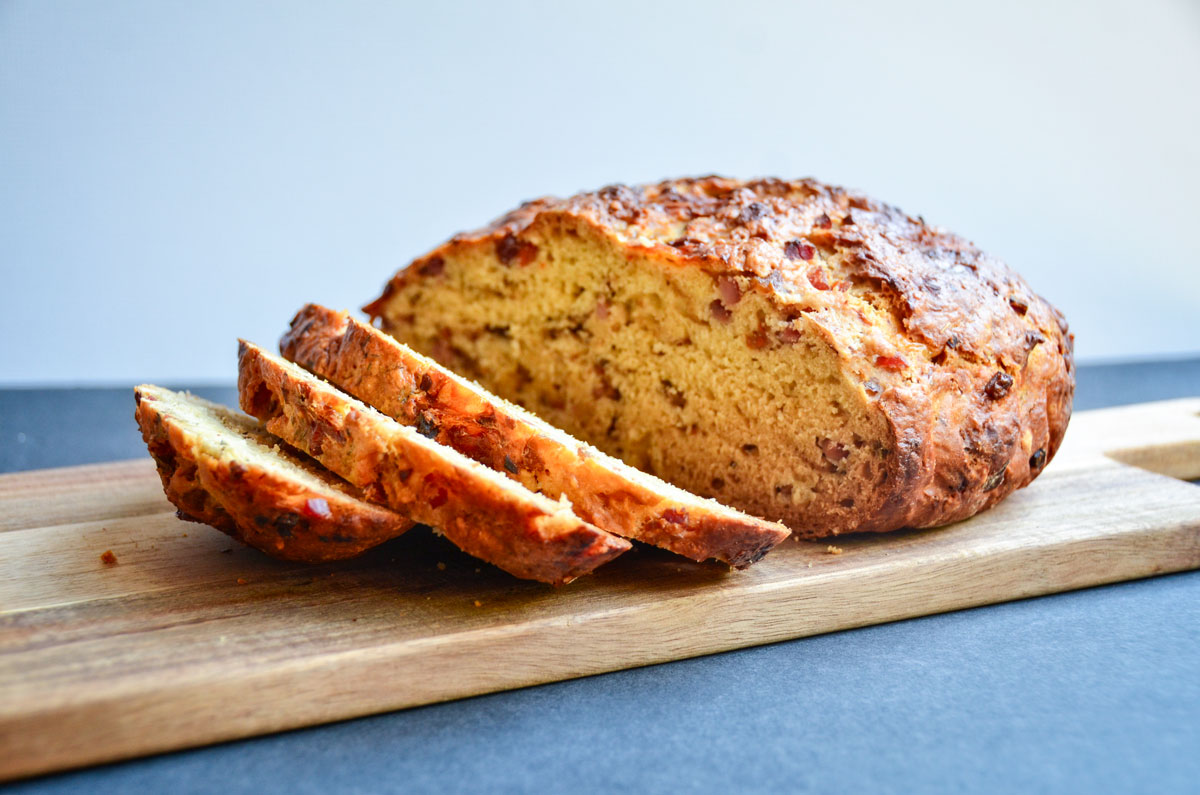
What I came up with differs enough from the original that I don’t feel comfortable calling this a ploughman’s loaf anymore, so I have dubbed it simply “ham and cheese bread.” In the spirit of the original, though, this is a quick rise bread that includes savory ham, cheese and sundried tomatoes. Because the bread uses baking soda rather than yeast for leavening, it comes together fast. The add-ins and herbs make it savory and satisfying. I have skipped the chutney altogether, though a schmear atop a warm slice would do the job without throwing off the moisture balance of the recipe.
When I pulled this version out of the oven, I knew I had a winner. The bread rose more evenly, with a slightly crumbly, tender crust. Just like the first time, my kitchen filled with a heady scent and the combination of ham, cheese and tomatoes was exactly what I had been longing for.
The day after I made it, I popped a slice in the toaster, which I enjoyed even more than eating it fresh from the oven. Paired with a scrambled egg, this would be an outstanding brunch. I have eaten it alongside a simple green salad for a fast, light supper. With a sliced apple or other fruit, it would also be a wonderful meal on the go––far tastier and nutritious than a trip to a drive though. I am glad I gave myself a do-over on this one; it has been worth every bite.
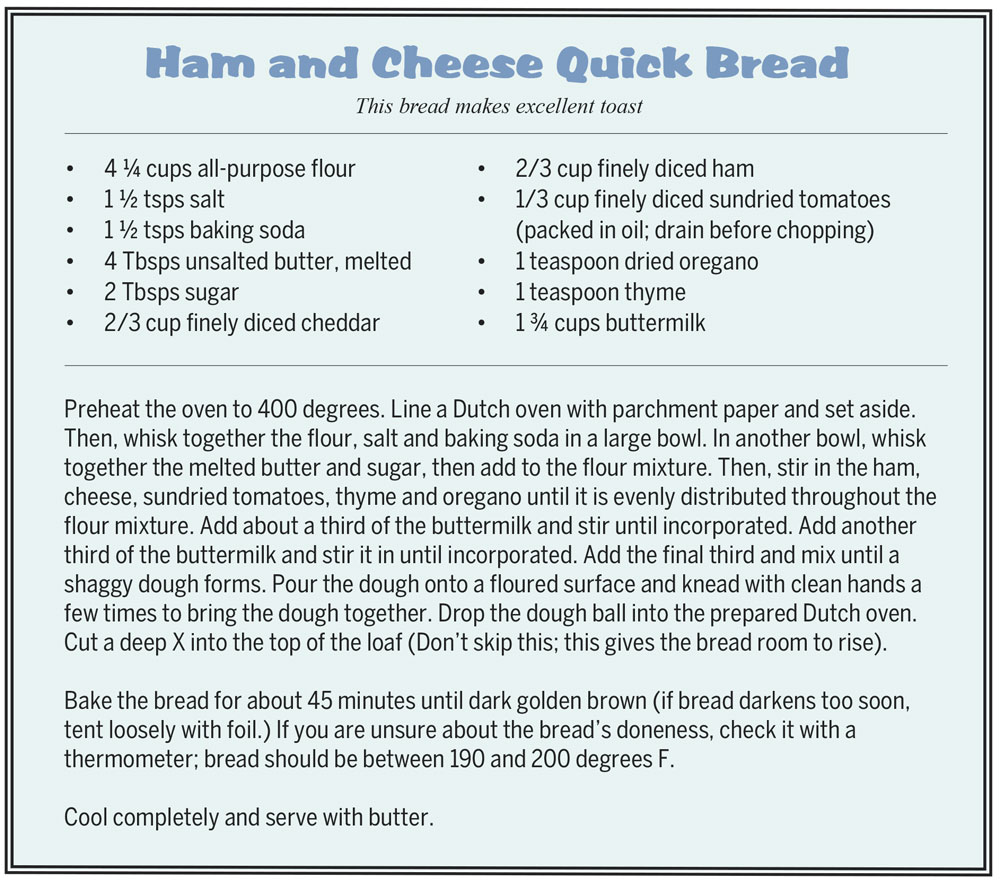
Ham and Cheese Quick Bread
This bread makes excellent toast
- 4 ¼ cups all-purpose flour
- 1 ½ tsps salt
- 1 ½ tsps baking soda
- 4 Tbsps unsalted butter, melted
- 2 Tbsps sugar
- 2/3 cup finely diced cheddar
- 2/3 cup finely diced ham
- 1/3 cup finely diced sundried tomatoes (packed in oil; drain before chopping)
- 1 teaspoon dried oregano
- 1 teaspoon thyme
- 1 ¾ cups buttermilk
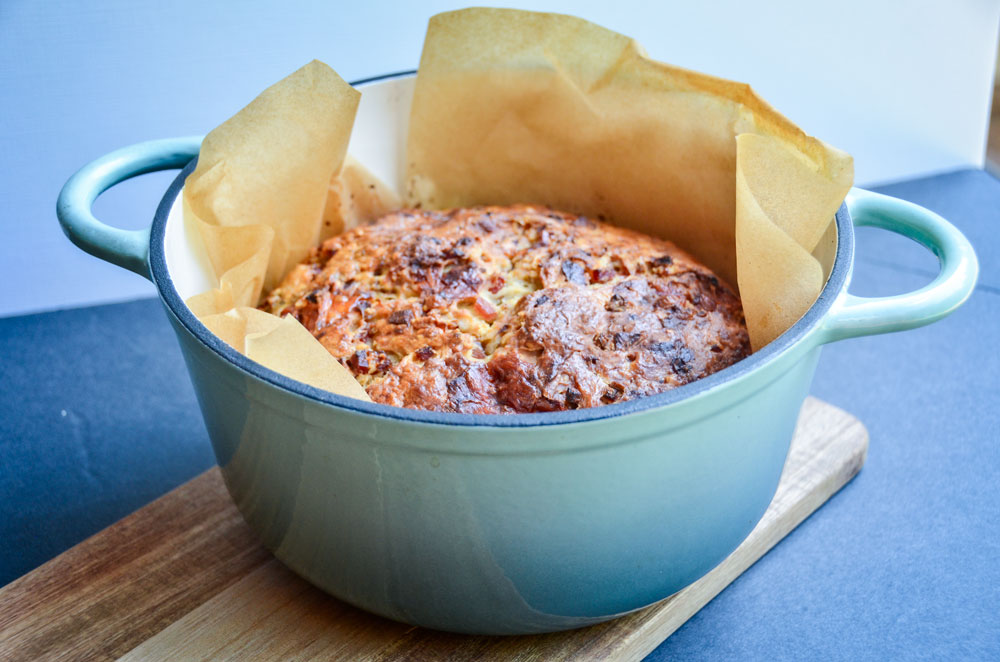
Preheat the oven to 400 degrees. Line a Dutch oven with parchment paper and set aside. Then, whisk together the flour, salt and baking soda in a large bowl. In another bowl, whisk together the melted butter and sugar, then add to the flour mixture. Then, stir in the ham, cheese, sundried tomatoes, thyme and oregano until it is evenly distributed throughout the flour mixture. Add about a third of the buttermilk and stir until incorporated. Add another third of the buttermilk and stir it in until incorporated. Add the final third and mix until a shaggy dough forms. Pour the dough onto a floured surface and knead with clean hands a few times to bring the dough together. Drop the dough ball into the prepared Dutch oven. Cut a deep X into the top of the loaf (Don’t skip this; this gives the bread room to rise).
Bake the bread for about 45 minutes until dark golden brown (if bread darkens too soon, tent loosely with foil.) If you are unsure about the bread’s doneness, check it with a thermometer; bread should be between 190 and 200 degrees F.
Cool completely and serve with butter.
Article and photos by Lisa Crockett