Defending against mountain pine beetles
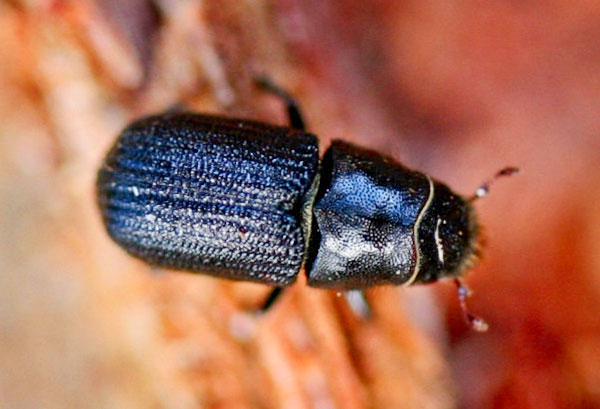
A close-up of a mountain pine beetle. The adult beetles are approximately 5mm, the size of a grain of rice.
Pine trees, specifically ponderosa pines, are part of what make Castle Pines special. Unfortunately, these magnificent trees face a recurring threat, the dreaded mountain pine beetle.
Pine beetles are native to Colorado and can be beneficial when they target diseased and dying trees, thinning the forest for fresh new trees. However, when the forests become stressed from drought and hot weather, these insects can get out of control and devastate forests.
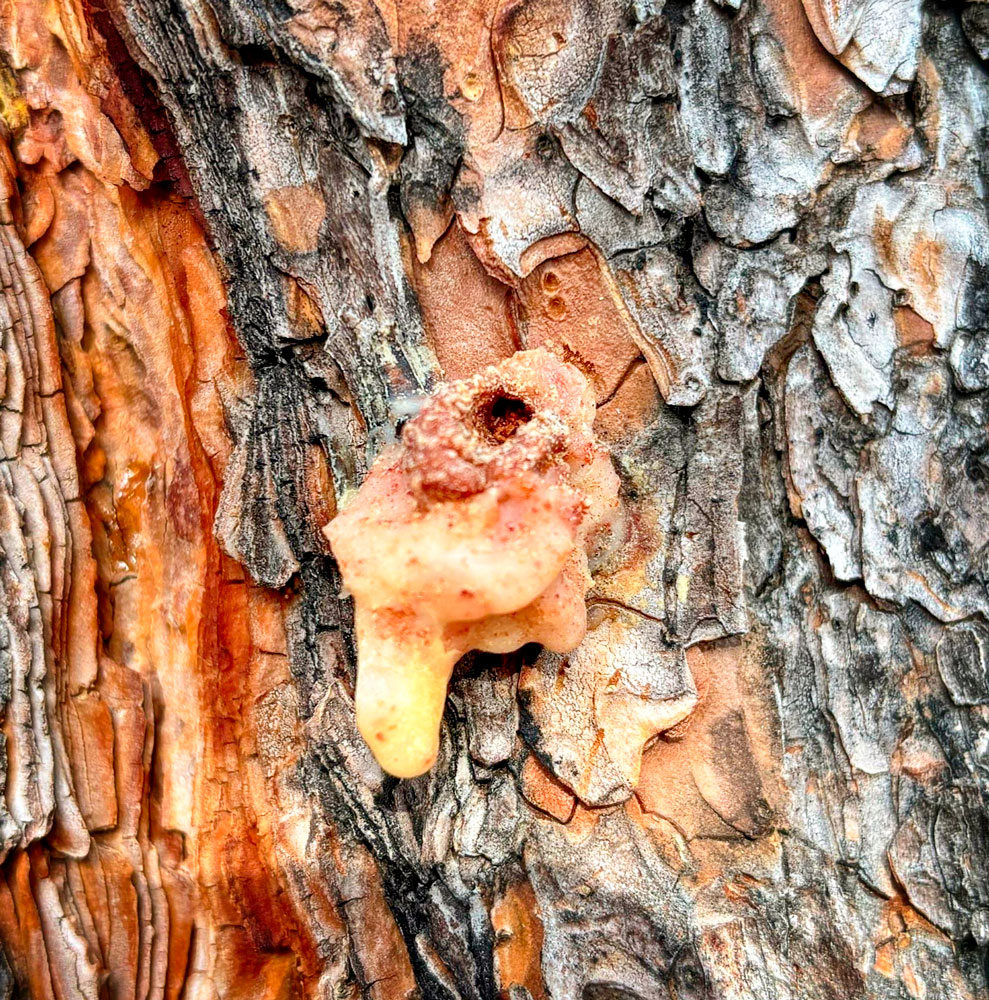
A pitch tube in a pine tree, which appears as a glob of sap, a prime indicator of a beetle infestation.
The beetles can attack almost any type of pine tree, but ponderosa pines, lodgepole pines and limber pines are the most susceptible. Evidence of beetle infestation includes the presence of many popcorn-shaped globs of sap, known as pitch tubes; sawdust from boring in crevices and around the base of the tree; exit holes in the bark; and sometimes woodpecker damage, as the birds feed on the beetles. Pitch tubes are the tree’s defense against the beetles. If there are only a few pitch tubes and many have dead beetles encased in them, the tree may have successfully defended against the attack. The outer layer of bark can be removed to confirm the presence of beetles. Unfortunately, once a tree is infested, it is unlikely to survive and the best practice is to remove it.
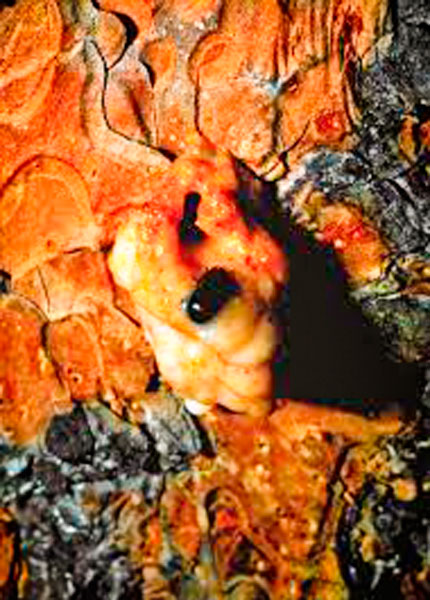
A successful pitch tube, in which the pine beetle is trapped in the sap.
Old age, crowding, poor growing conditions, drought, damage and root disease can all leave pine trees vulnerable to beetle attacks. Removal of infested and unhealthy trees is the best remedy to prevent the spread of pine beetles, but infested wood should not be moved until it can be dropped off at a secure location, as movement could spread the beetles. The Douglas County slash-mulch site on Delva Way accepts beetle-kill wood, but not during the beetle’s active season. Infected trees should be removed before July, when the beetles fly to find new hosts. If infected trees are discovered after June, they should be marked for removal in the next spring.
For more information, visit csfs.colostate.edu and search “pine beetle.”
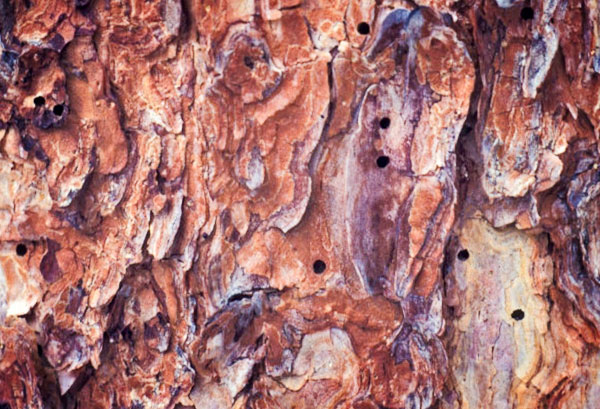
Exit holes in the bark of a pine tree, another indicator of a pine beetle infestation.
By Rachel Poe; photos courtesy of Colorado State Forest Service, Colorado State University