Douglas County breaks ground on biochar facility
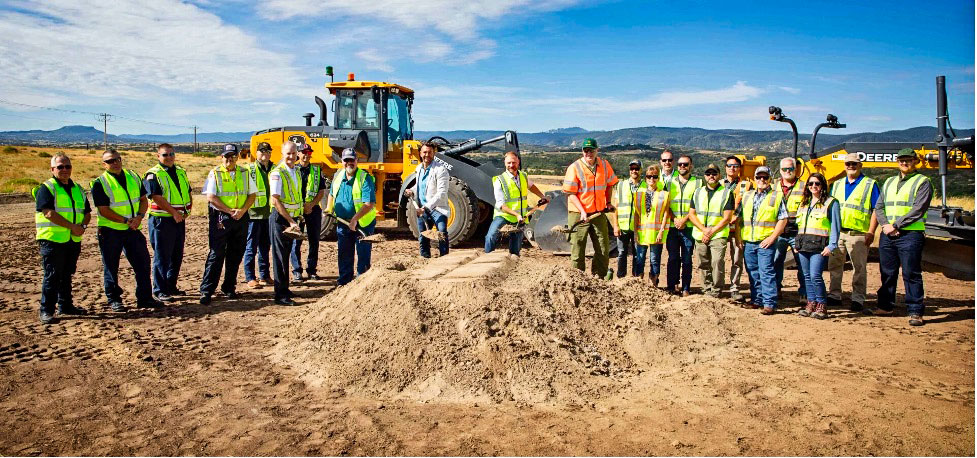
Groundbreaking at the new biochar facility in Sedalia on July 23. To help mitigate wildfires and climate change, the facility, which will take wood and plant waste and convert it to a carbon product, will be operational in spring 2026.
Douglas County officials recently held the groundbreaking for a future biochar and waste diversion facility in Sedalia, south of Airport Road, off of US Highway 85. The facility, which is intended to be a sustainable solution for wildfire mitigation debris, will be operational in spring 2026 and the first county-owned and operated biochar facility in the United States.
In 2024, the Douglas County Board of Commissioners voted to approve up to $3 million to build the biochar facility. This will allow Douglas County to expand its mitigation efforts to more acreage every year and create a place for residents to bring debris. Douglas County Public Works is leading the planning, along with Douglas County Wildfire Action Collaborative (DCWAC), a group of emergency management professionals and wildfire science experts.
What is biochar? Biochar is a carbon-rich material produced by heating organic biomass like wood and plant waste through a process called pyrolysis. Once pyrolysis is complete, the biochar product can be packaged and sold. The County said that the sale of these products could pay for the facility in nine years or fewer.
How does a biochar facility work? The facility receives biomass (like wood and organic materials), which are prepared and cleaned and sometimes dried. Then the biomass is fed into the pyrolysis reactor and heated at high temperatures without oxygen, which leads to thermal decomposition.
What are the benefits of biochar? The biochar facility will serve as a much-needed local outlet for wood and debris left over from wildfire remediation efforts. Once operational, the facility will produce biochar as a product: in gas or oil forms (used for heat and fuel, respectively) or in a solid form, where it can be ground or mixed and added to soils. Biochar enhances the soil, improves water retention and sequesters carbon, a win for the environment.
“These magical carbon products can reduce water consumption on golf courses by up to 50%, fertilize lawns and gardens, and remove forever chemicals like PFAS (man-made chemicals that contaminate water sources) from the water,” said Douglas County Commissioner and Chair of DCWAC Abe Laydon. “We are excited to be the first county and are certain more counties will follow once they understand the potential for biochar.”
Down the road, the plan is to extend collection of other types of waste including slash, hazardous household chemicals, residential yard waste and electronics.
For more information, visit douglas.co.us and search “biochar.”
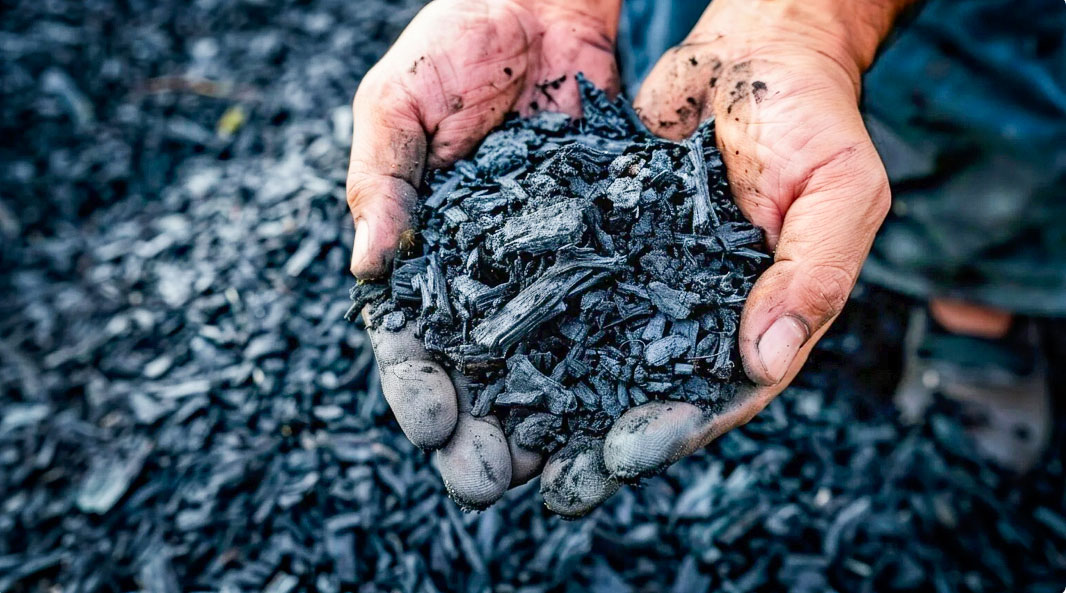
Biochar is a carbon-rich material produced by heating organic biomass like wood and plant waste and in solid form is added to soils to improve water retention and sequester carbon.
By Karen Leigh; photos courtesy of Douglas County