Updated tire laws

One way to check tread depth is the quarter test. If you place a quarter edgewise upside down in the tread and the top of George Washington’s head is covered by the end of the tread, then your tire is good (image on left). If you can see all of Washington’s head (image on right), your tires are worn and should be replaced.
Colorado recently updated its Traction and Chain Laws, which specify the types of tires required for winter driving, the necessary tread depth on those tires and when chains must be used. During winter storms or when conditions require, the Colorado Department of Transportation (CDOT) will activate the Passenger Vehicle Traction Law, Passenger Vehicle Chain Law or Commercial Vehicle Chain Law. CDOT can activate these laws on any state highway.
When CDOT activates the Passenger Vehicle Traction Law, all motorists must have AWD/4WD vehicles with tires that are designated as mud and snow (M+S icon) or winter tires (mountain-snowflake icon) or with an all-weather rating by the manufacturer. The tires must have a tread depth of at least 3/16-inch. For vehicles that do not meet these requirements, including all 2WD vehicles, tire chains or an approved alternative traction device on two or more drive tires are required. The Traction Law is automatically in effect each year September 1 through May 31 on the I-70 Mountain Corridor between Dotsero and Morrison.
Alternate traction devices include drive wheel sanders, pneumatically driven chains and textile traction devices. Drive wheel sanders, also called traction sanders, are devices that carry and drop grit to improve tire traction in icy conditions. Pneumatically driven chains are chains that spin under the drive wheels while the vehicle is in motion to provide the needed traction. Textile traction devices, sometimes called snow socks, are fabric boots which encompass tires to help them better grip the road.
CDOT implements the Passenger Vehicle Chain Law during severe winter storms. It is the final safety measure before closing the highway. When this law is in effect, every vehicle must have chains or an approved alternative traction device.
Although the Commercial Motor Vehicle Chain Law has “commercial” in the name, the law applies to any vehicle with a manufacturer Gross Vehicle Weight Rating (GVWR) or Gross Combined Weight Rating (GCWR) of more than 16,000 pounds, whether for private or commercial use. As of August 2024, drivers of these vehicles must have chains or alternate traction devices from September 1 to May 31 and must affix them, when required, to all drive tires, up to four.
For more information and winter driving tips, visit csp.colorado.gov/chain-law-information and codot.gov/travel/winter-driving.
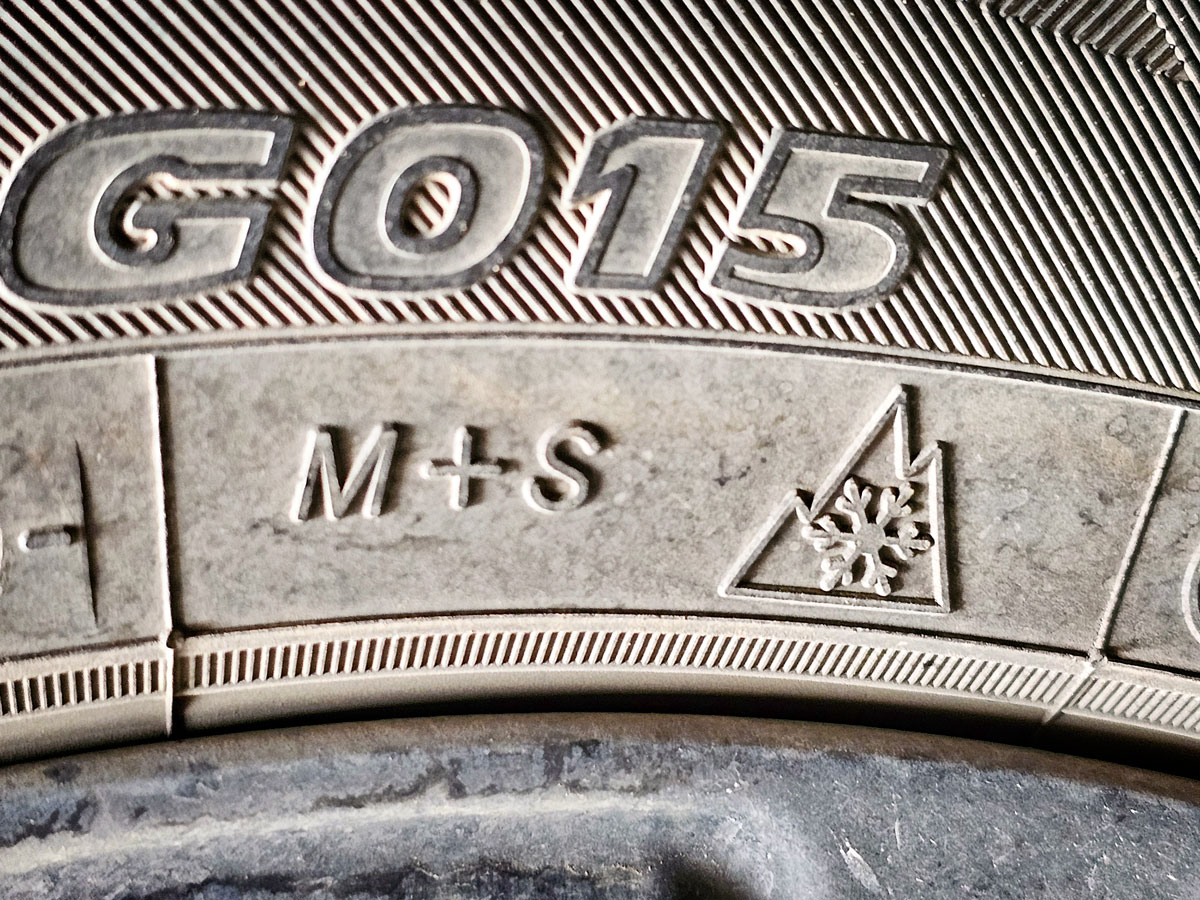
The M+S symbol indicates mud and snow tires and mountain-snowflake icon indicates winter tires.

The ice grip icon on tires, a mountain peak with an ice cap inside a triangle, signifies a new, higher standard for winter tires, showing they offer superior braking and traction on bare ice, performing at least 18% better than a standard tire in official tests.
By Susan Helton; photos by Rachel Poe