Butters set the table for Parker

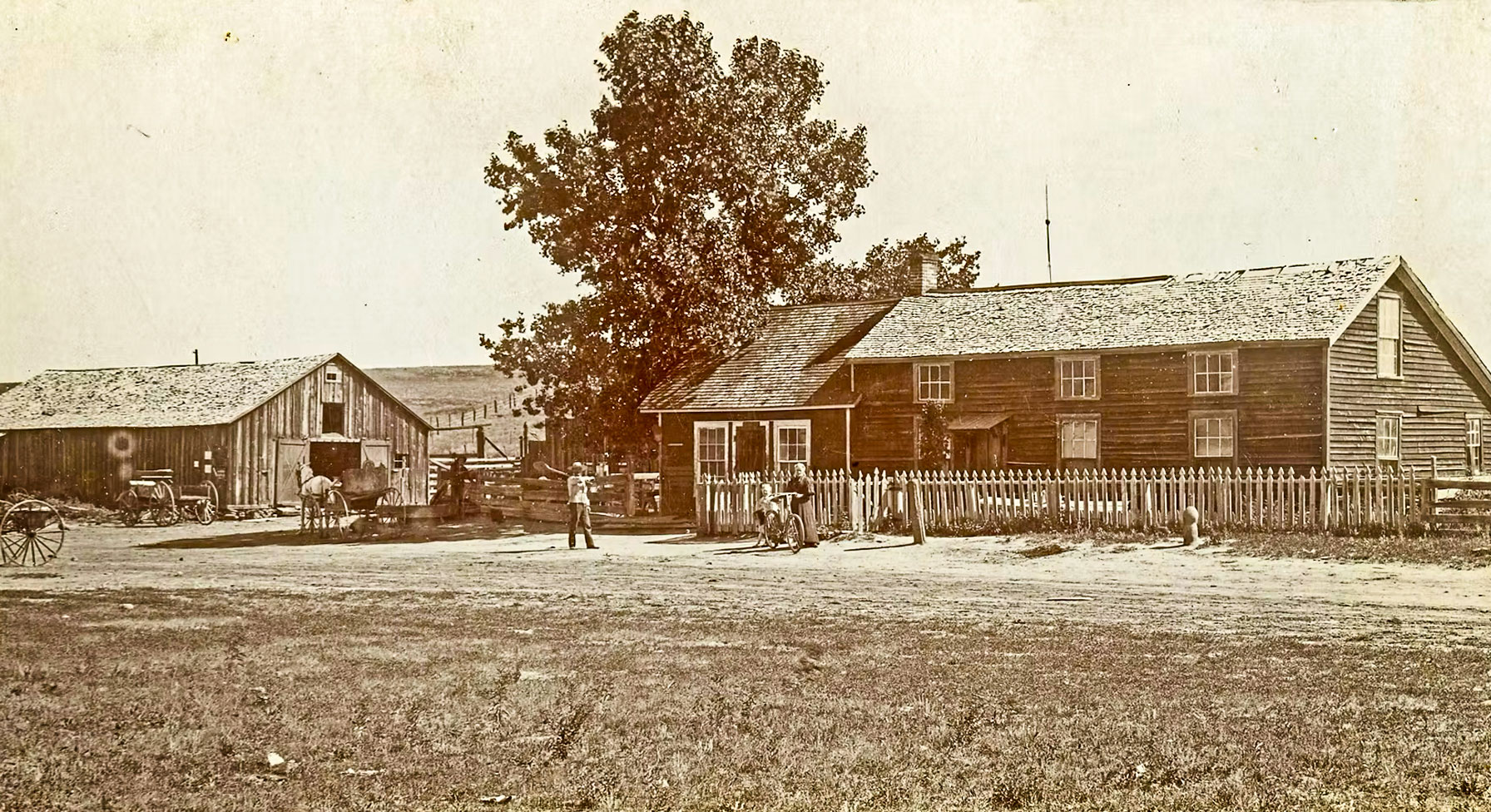
The 20-Mile House with Alfred Butters’ cabin in middle of the picture, appended to the main building.
Parker is an appealing Front Range bedroom community with an Old West flavor. The town is vastly different from its beginnings when it was a bullwhackers’ haven, a mere stopping point for drivers of oxen from here to there. Alfred Butters had an inkling then, a notion of service, how to grow the town and profit from what was to come.
To pioneers, Douglas County was the beginning of the end of the “Great American Desert,” a barrier between civilization and wild nature. Called the “Starvation Route,” the middle branch of the Smokey Hill Trail brought one to today’s Town of Parker center. The South Platte Overland and Cherokee Trails also crossed our county. All treks West dealt serious pain and anguish; many prospective settlers did not survive.
After the 1859 gold frenzy petered out, “free” land and commercial opportunities drew others to our West. Liveries, blacksmiths and way stations serviced the trade. Alfred, a former schoolteacher with business savvy, was first among them to Parker.
To profit from the stream of overland adventurers, he built a way station in 1862, a forerunner of modern-day Buc-ees. Located south of today’s United Methodist Church on Parker Road in a pine grove, his operation was mighty small. Nonetheless, it met critical needs: postal services, crude maps, provisioning and all-around advice. Giving directions to his place was easy, hence Parker’s early name “Pine Grove.”
Strangely enough, Alfred did not build on his own land. The Lord brothers had an ownership claim preceding his. Likely, that fracas forced Alfred to sell the building to a Mr. Goldsmith. In 1864, George Long traded for Goldsmith’s structure, moving it to Mainstreet and its current location today. Later, the building served as the anchor building for the 20-Mile Stage Stop, which was named for the distance remaining from Pine Grove to the city of Denver. The 20-Mile Stage Stop became successful, serving four stage lines at one time. In spite of its success, the property changed hands twice more by 1870, first to Nelson and Emma Doud Gould and then to the town’s namesake, James Parker. No matter the ownership, the hostelry became widely known as among the finest accommodations in the region.
Life was still at risk in the area and Native Americans were known to strike travelers and isolated homesteads. The banks of Cherry Creek were prime game hunting grounds in earlier days, and resentment for the loss of food and wares was understandable. Because of the risk and that fact that most of its business was transient on wheels or hooves, the town of Parker remained lightly populated, still a mere way point for those going elsewhere.
The arrival of shakers and movers with a long-term vision of the community they wanted made all the difference. Chief among them were James and Mattie Parker and John and Elizabeth Tallman. The Parkers bought the 20-Mile Stage Stop in 1870.
Part II, “Parker Grows,” to follow next month. In the meantime, more information about Parker’s history can be found at parkerhistory.org.
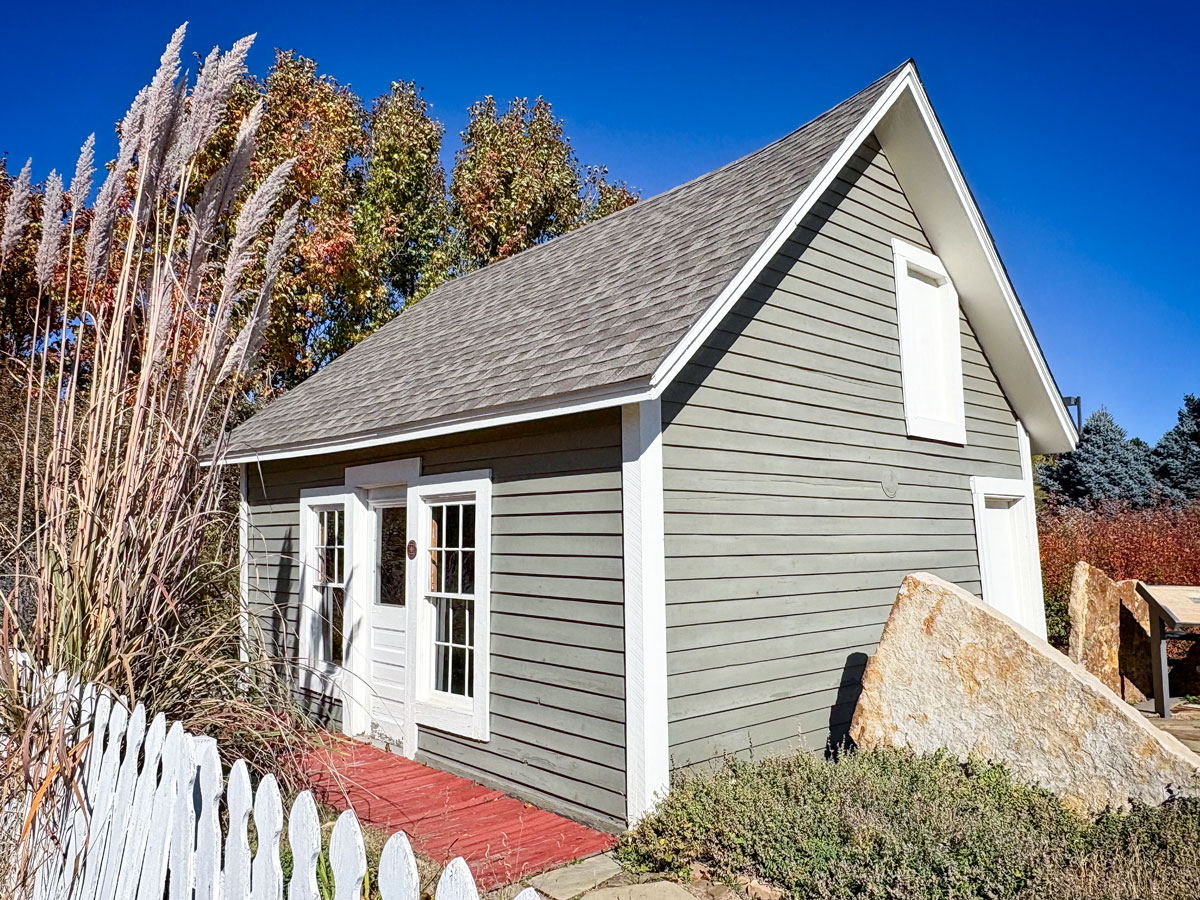
Article and photo by Joe Gschwendtner; photo courtesy of the Parker Area Historical Society