Colorado living: Request-A-Bug
Yes, a bug! The Colorado Department of Agriculture (CDA) offers a fee-based service for land managers and land owners, including homeowners, to request biological control agents for pest control. Biological control, also called biocontrol, is a form of pest management that uses the natural enemies of weeds or pests.
Successful biological pest control offers several benefits including reduced costs, a decreased amount of chemicals entering the environment, and the establishment of helpful insects for natural, permanent pest control. The Palisade Insectary, in the town of Palisade in western Colorado, imports, raises and researches biocontrol agents and distributes them through the state’s Request-A-Bug program.
For more than 80 years, CDA has promoted the use of biocontrol in pest management. The Palisade Insectary was created to counter the accidental introduction into Colorado’s Grand Valley in 1944 of the peach moth, a voracious moth that threatened the area’s valuable orchards as its larvae ruined fruit by eating their way through apples, pears and peaches. The Insectary was one of the first-ever government funded programs for biocontrol in the nation. In 1946, it successfully released parasitic wasps as biocontrol agents against the peach moth. The program continues to this day.
In the years following that first success, the Insectary released other biocontrol agents for several insect pests, then also for some difficult-to-control noxious weeds. The Insectary releases and monitors roughly 20 species of biocontrol agents for use against weeds and insect pests. Since its establishment, the Insectary has studied and released more than 90 insects and fungi for use.
Plant pest examples include field bindweed (a vine with white to pink trumpet-shaped flowers), musk thistle (a non-woody plant with spiny leaves and fuzzy purple flowers), and diffuse and spotted knapweed (plants that form tumbleweeds, with many-branched stalks tipped with urn-shaped flowers). Biocontrols for plant pests include microscopic mites, beetles, flies, moths and various weevils.
There are several Request-A-Bug programs available. Because there is often high demand, signing up on the waitlist as early as possible is recommended. The Insectary fulfills requests in order of date received but cannot guarantee a release for each request, as the available amount of biocontrol agents varies each year. The Insectary staff will email when the biocontrol agents are ready to ship. After payment is made, the order will arrive the next day via FedEx. If not fulfilled, requests do carry over from year to year.
For more information, and to sign up to request a bug, visit ag.colorado.gov and search “request a bug.”
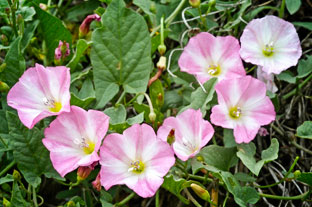
Field bindweed is an invasive weed that reproduces from seed and creeping horizontal roots. Biocontrol in the form of a microscopic mite whose activity can kill the bindweed is available through Request-A-Bug.
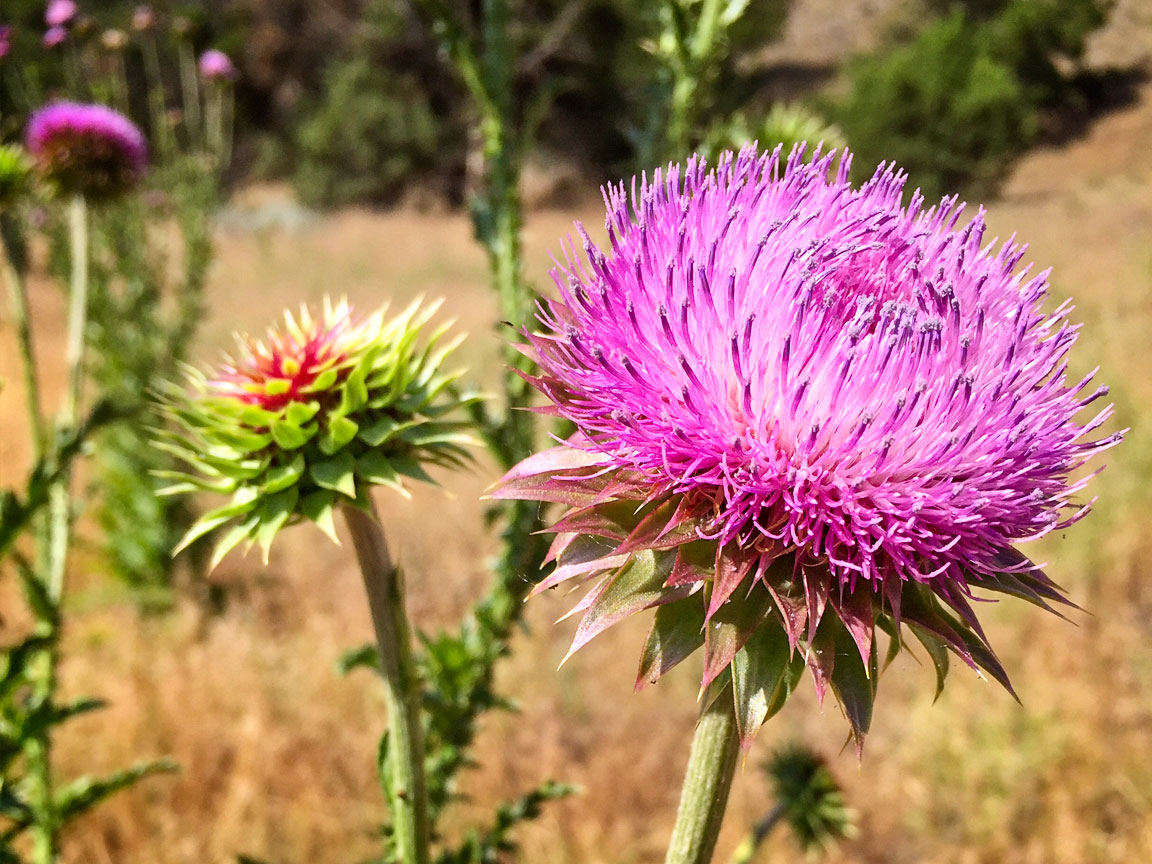
Musk thistle, also called nodding thistle, is a noxious weed that reproduces only by seed. Biocontrol in the form of the Musk Thistle Rosette Weevil or Crown Weevil (below), whose activity can impact the number of seeds the plant produces, is available through Request-A-Bug.
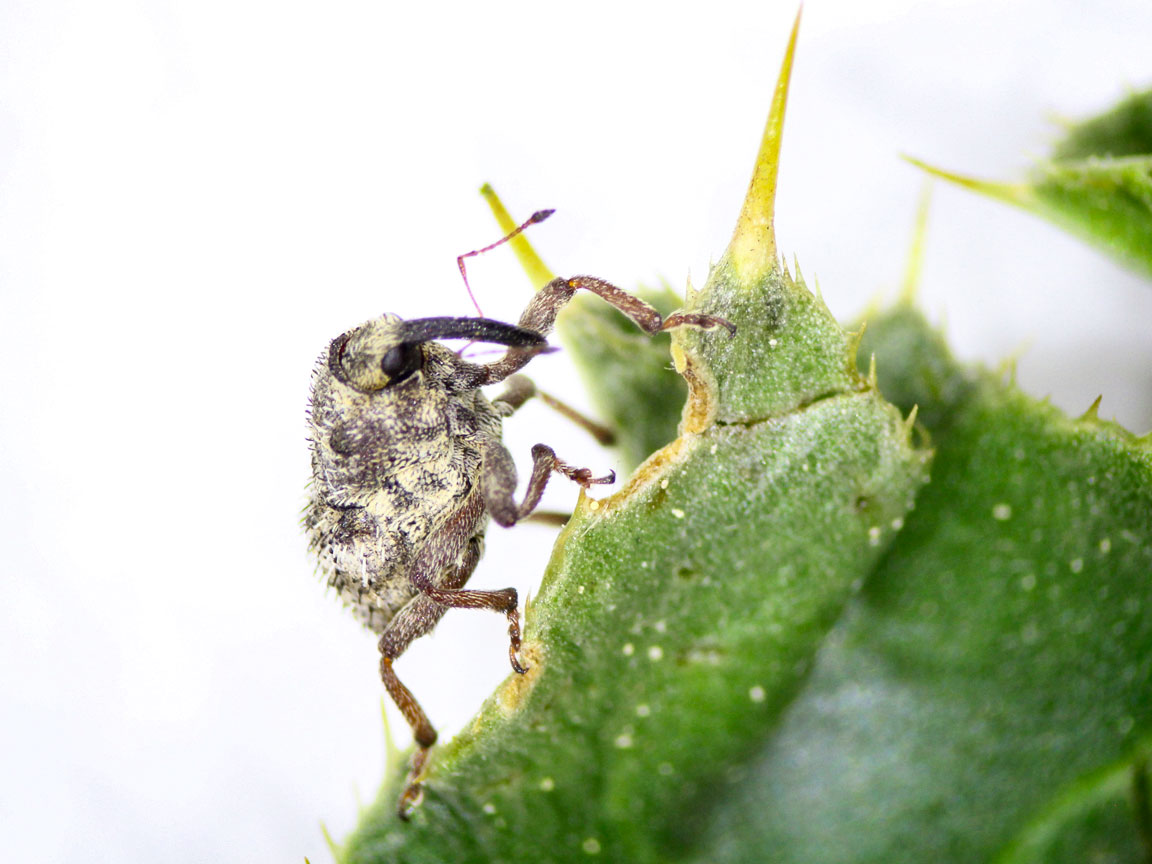
By Susan Helton; photos courtesy of Colorado Department of Agriculture