Our wild neighbors
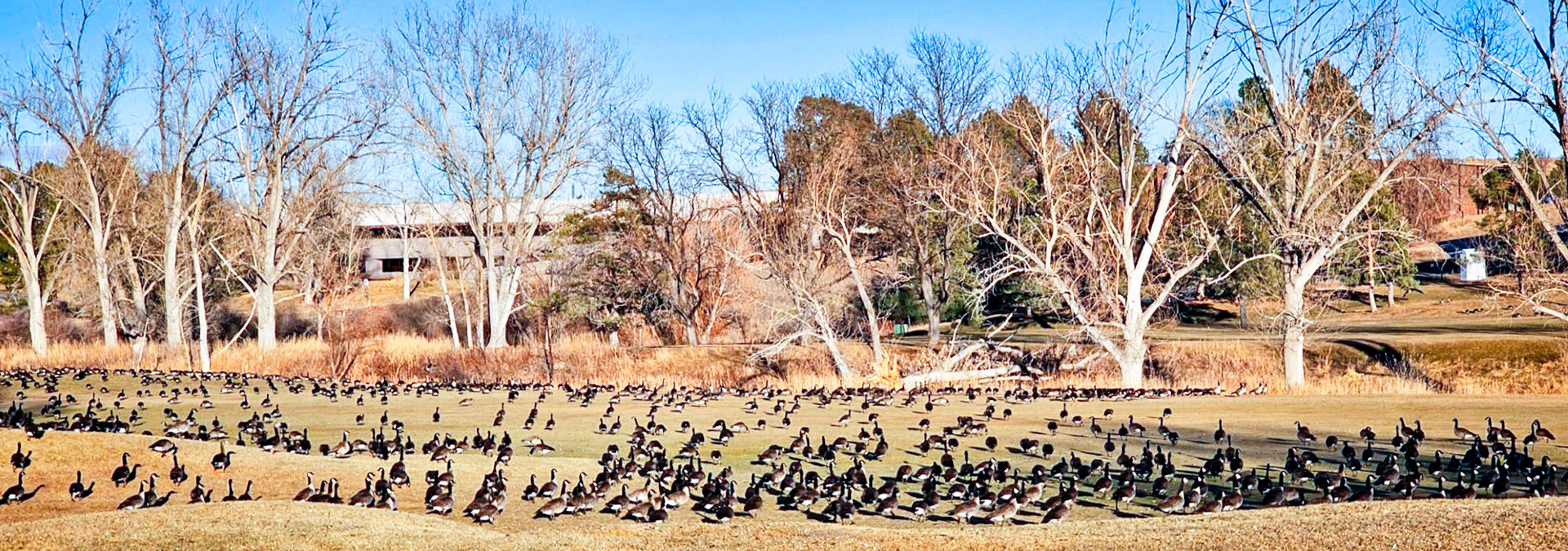
A large flock of geese visit Douglas County.
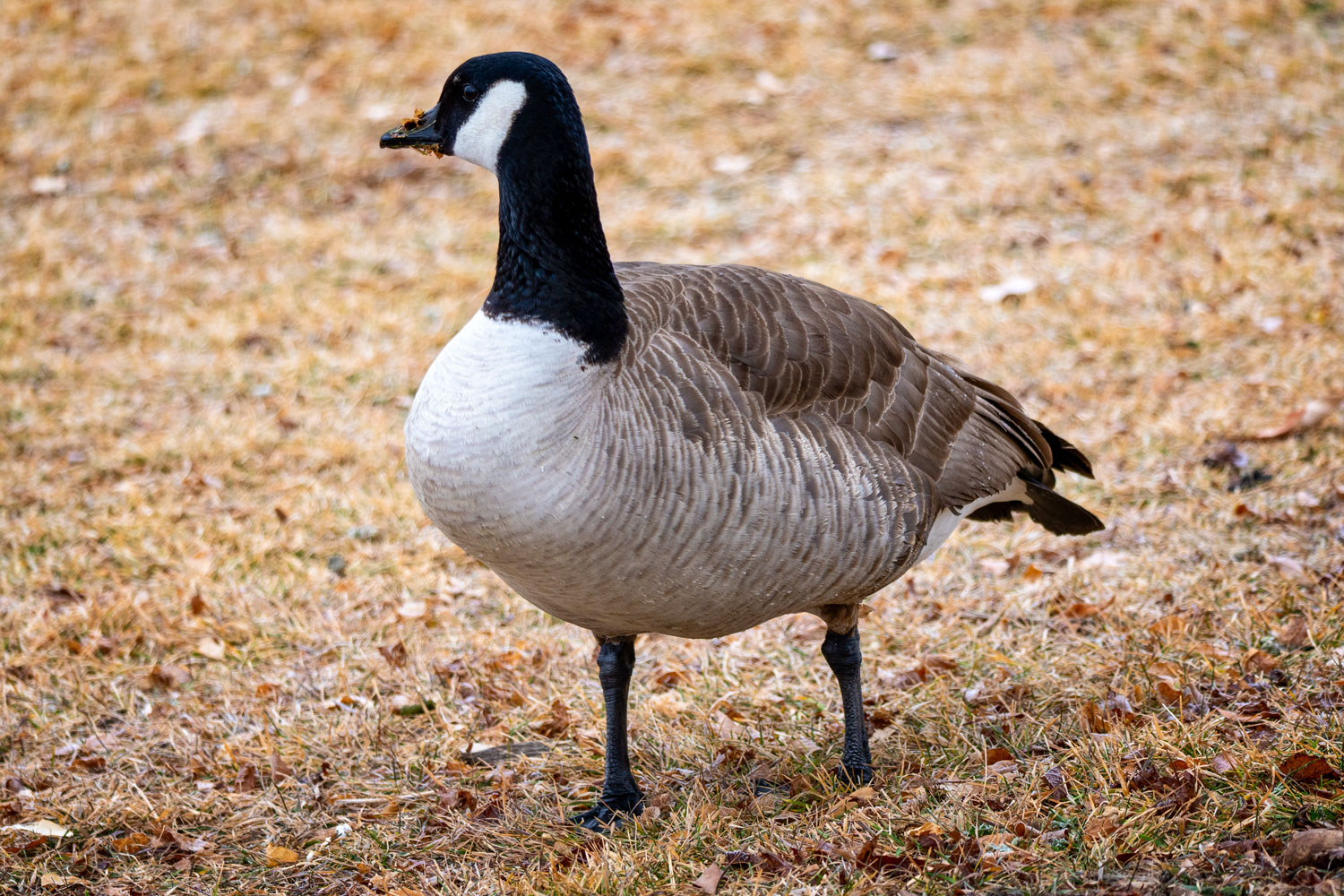
They are a familiar sight and sound around Colorado—large grey-brown waterfowl with long black necks, white “chinstraps” and loud honks: Canada geese (Branta canadensis). Though commonly called “Canadian” geese, the official name is “Canada.” Some may tell you this is because they are named after a person named Canada, but that is untrue—they are named after the country.
Part of the duck and swan family, Canada geese are found throughout North America and in parts of Europe and Asia. The birds are seen here year-round, though in somewhat higher numbers in the winter. This is because some geese are permanent residents and some geese migrate north to Canada for the summer and return south to the United States, and sometimes even to Mexico, in the summer. These birds migrate in large flocks with a distinctive “V” formation. The exact reason for this preferred flight pattern is unknown, though it is thought to be energy efficient and easy for each bird to keep an eye on the others. Being the lead bird is especially taxing, so several experienced flyers will rotate through the position during long flights.
These waterfowl are impressively adaptable, having learned to thrive in many urban and human-populated areas. Historically found near lakes, rivers and marshes, today they are frequently found in city parks and reservoirs, on golf courses, soccer fields and suburban ponds. Weighing eight to 13 pounds and generally about two to three feet tall with a wingspan that can exceed six feet, they are primarily herbivores (occasionally eating insects or fish), grazing on grasses, grains, sedges, seeds and seaweed.
Canada geese mate for life, with females laying an average of five eggs per brood each year, but as many as 12 and as few as two. Both parents care for the young and can be quite aggressive when protecting their goslings, including hissing, biting and slapping with their wings. The family remains together through winter and both yearly migrations. The summer molt for adult geese occurs during breeding season. Unlike songbirds, when waterfowl molt they lose all their flight feathers at once, meaning they cannot fly for a few weeks. Newborn goslings are able to walk, swim, dive and find their own food immediately. The adults regain the ability to fly just as the goslings are learning to fly.
Cackling geese (Branta hutchinsii), so called because of the relatively high-pitched sounds they make, are close relatives of Canada geese. So close, in fact, that until 2004 they were considered the same species. Telling the species apart is challenging. Cackling geese are generally smaller with shorter necks than Canada geese, but with the same coloring and same distinctive black head and neck with a white “chinstrap.” Cackling geese and Canada geese are frequently found in the same areas, so it can be tempting to assume smaller geese are cackling and larger are Canada, but this identification is not foolproof, as there is some overlap between larger cackling geese and smaller Canada geese. Look for a shorter, more triangular bill and a more rounded head on a cackling goose, versus a larger bill and more sloping forehead on a Canada goose.
For more information about Canada geese, visit cpw.state.co.us/species/canada-goose; for more information about cackling geese, visit audubon.com and search “cackling goose.”
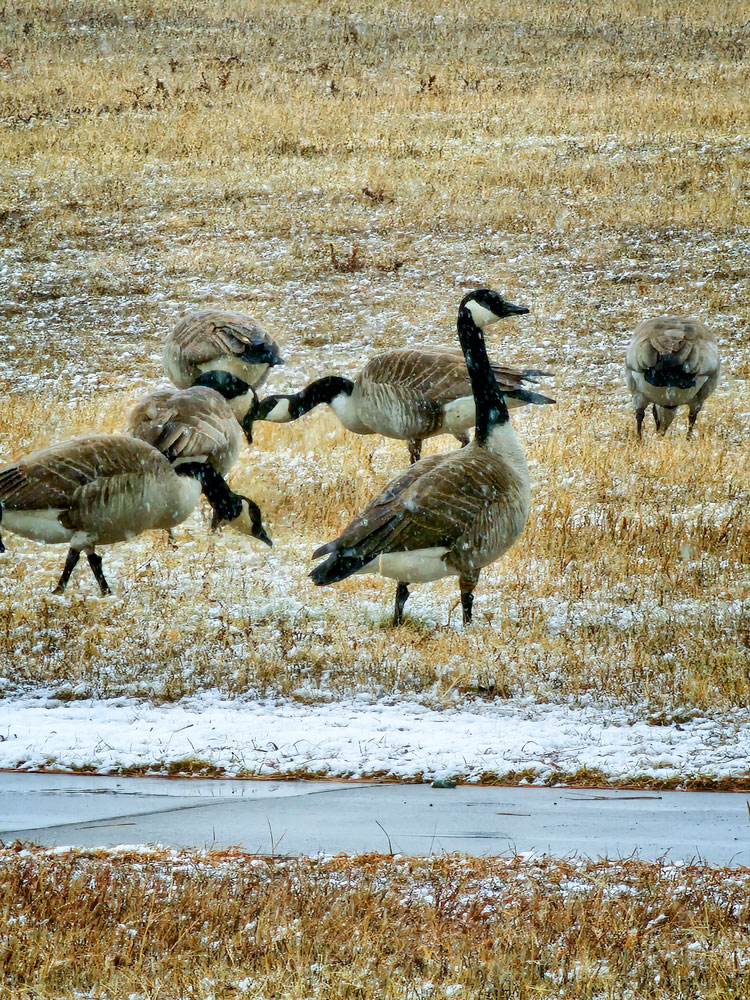
Canada geese (top) have long necks, while cackling geese (bottom) have much shorter necks.
Article and photos by Rachel Poe; photo courtesy of Tom Norris