Should you fear the black widow?
When working in a dark basement or dusty shed, most people know to keep an eye out for a tiny but potent danger—the western black widow spider (Latrodectus hesperus). But how dangerous are they really?
Black widows tend to live in dark, undisturbed areas, usually close to the ground. They can be found under shrubs, near holes in the ground and in wood piles. Their webs are sticky and irregular. Despite looking much less elegant than many other spiderwebs, black widow silk is extremely strong, even stronger than steel of the same size and weight.
Although bites can be painful, the last recorded death from a black widow bite in the United States was in 1983. Not only that, but bites are very rare. A 2014 study showed that even when poked and prodded, most black widows would simply move away from the threat. Some would flick silk at the offender or play dead if the prodding became too intense. It was only when pinched (squeezed between simulated fingers for an extended period of time) that a little over half of the spiders began to bite. Even then, more than half of the bites were dry—they contained no venom.
So should you fear the black widow? You should certainly respect them. When working in dark, dusty spaces, especially ones that have been unused for an extended period of time, it is wise to take precautions, such as wearing gloves and a long-sleeve shirt, turning on lights and/or using a bright flashlight, sweeping debris and cobwebs out of corners and holes before reaching into them, and keeping a sharp eye out for the small shiny spiders. But the threat posed by these arachnids has been largely overblown. Common sense and a good pair of gardening gloves will go a long way to keeping you safe.
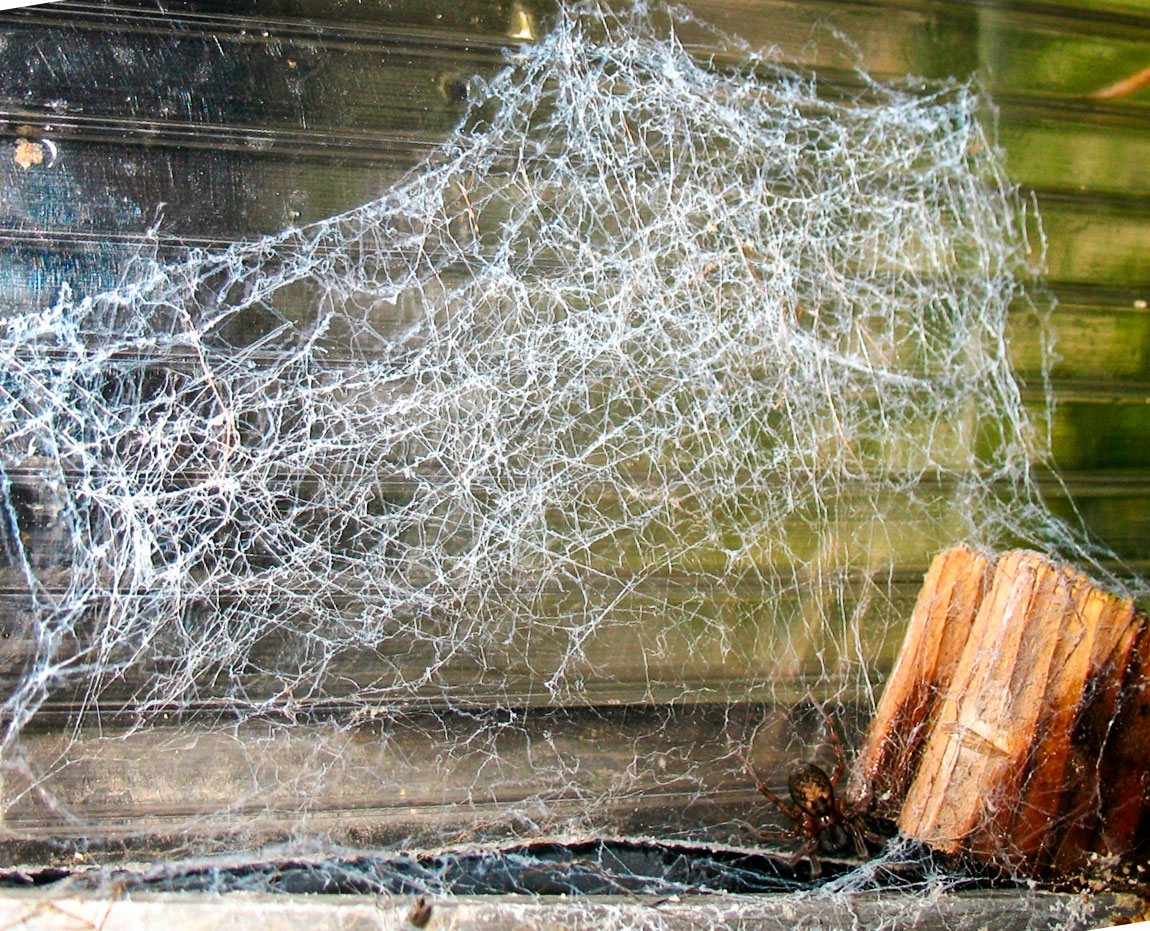
Black widows spin messy, irregular webs, making them a type of cobweb spider.
What about the brown recluse?
Good news! Brown recluse spiders (Loxosceles reclusa) are not endemic to Colorado. Per the Colorado State University Extension, sightings are extremely rare. Nonetheless, brown recluse are massively misidentified by lay people looking at any of a variety of harmless brown spiders commonly found in Colorado (funnel weavers / grass spiders, cellar spiders and wolf spiders, just to name a few). Even more good news—despite the fact that medical personnel are quick to blame a variety of skin conditions on “spider bites,” on the extremely rare occasion when a person is bit by a brown recluse, the symptoms are usually very mild.
By Rachel Poe; courtesy photo