The history of a holiday favorite
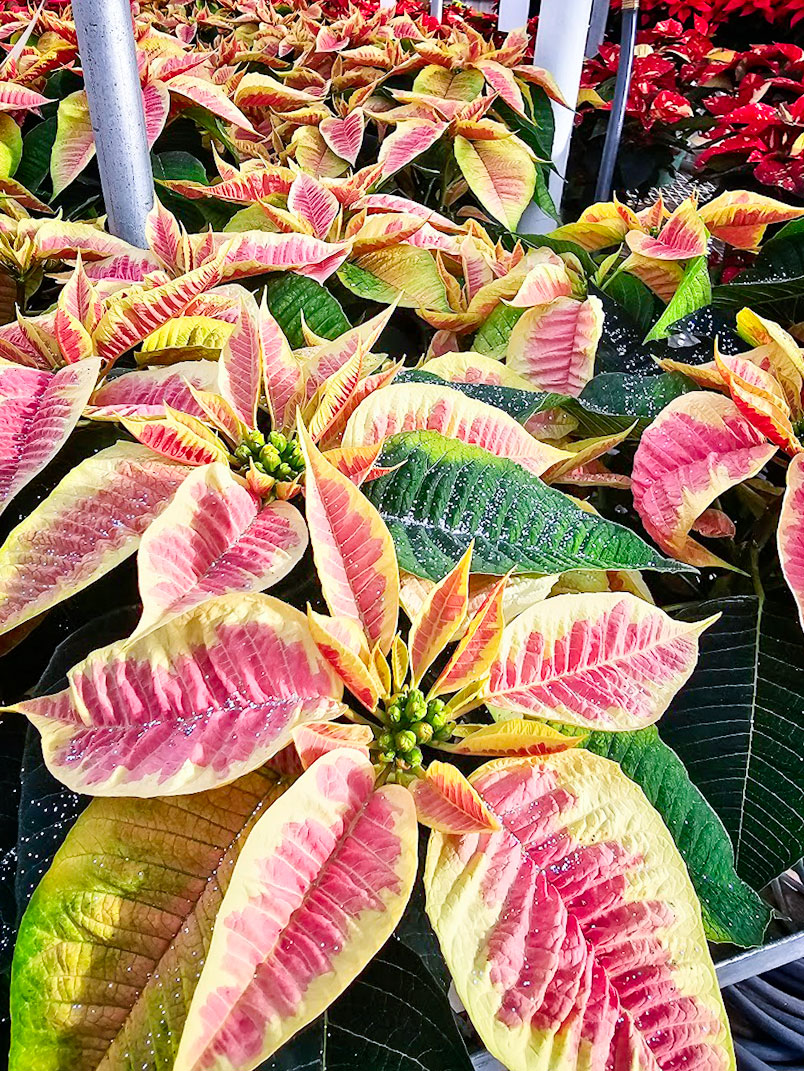
Traditionally red and green, poinsettias have been cultivated to display many hues from pink to yellow and are often dusted with glitter before sale.
Poinsettias (Euphorbia pulcherrima) have become a staple of modern holiday décor. Native to Mexico and Central America, poinsettias are a flowering plant, though not in the way you might think. The brightly colored parts are not flower petals, but rather modified leaves or “bracts.” The flowers are the small yellow bits in the center of the colored leaves. Poinsettias are considered shrubs or small trees, with wild poinsettias reaching up to 15 feet tall.
It is not hard to guess why poinsettias, with their vivid red and green and star-shaped leaves, became such a popular symbol of Christmas in the United States. In native Mexico, the connection runs even deeper due to an old legend. The tale holds that a young girl did not have a gift to offer baby Jesus, so she resorted to collecting a handful of weeds. When the meager gift was presented, the weeds transformed into a beautiful poinsettia, giving rise to the Mexican name for the plants of flores de nochebuena, variously translated as “flowers of the Holy Night” or “Christmas Eve flowers.”
Wild poinsettias have red or sometimes orange bracts. Cultivated poinsettias come in a whole range of colors, including red, pink, white, peach, yellow and variegated varieties. These brilliant colors do not come easily. As anyone who has tried to keep a poinsettia past the holidays can tell you, these sensitive tropical plants must be kept at a consistent temperature and moisture level for long term survival. And if one is able to keep a poinsettia healthy and green through the next summer, there is yet more work to be done to get the leaves to turn red in time for the holiday season. For a poinsettia to “rebloom,” it must have 14 hours of uninterrupted, complete darkness and 10 hours of bright light every day for about eight weeks.
Though there is a myth that poinsettias are highly toxic, they are not a major danger to people or pets. If ingested, symptoms are usually mild and may include mouth irritation or stomach upset, rarely even requiring medical attention. Nonetheless, it is still good practice to keep the plants out of reach of pets and children.
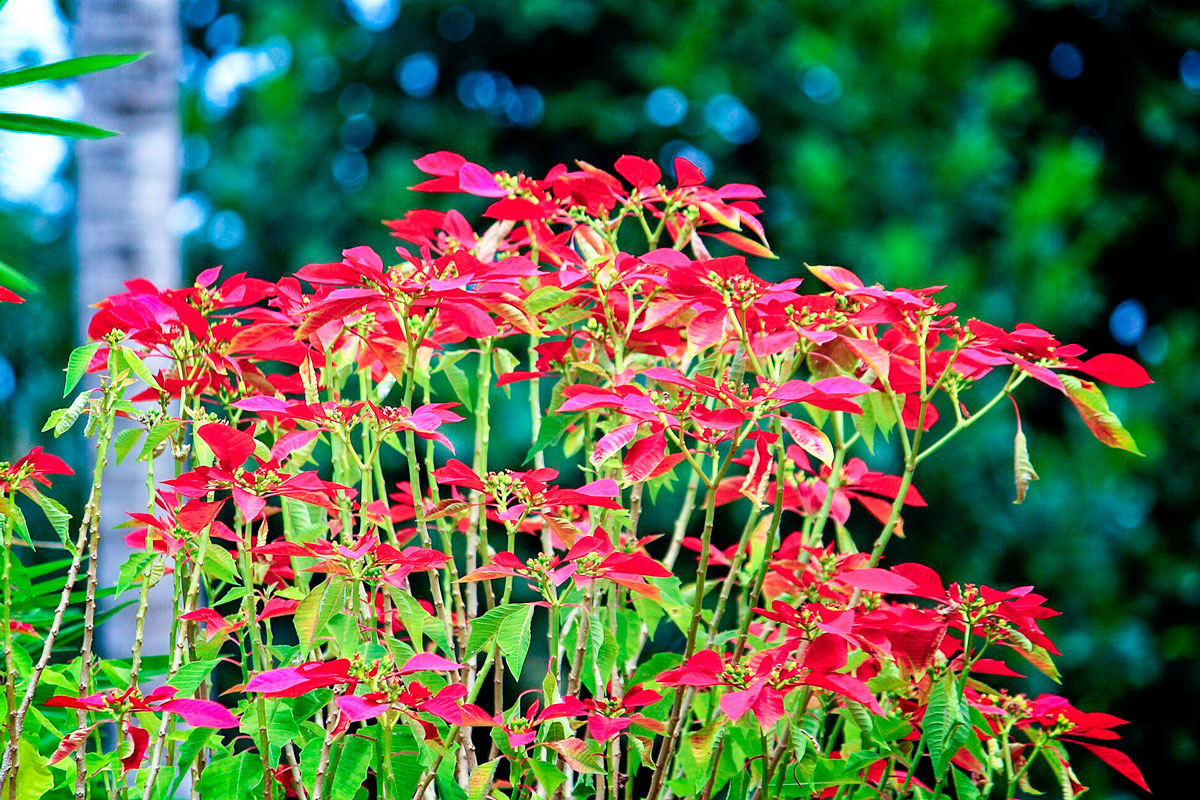
Wild poinsettias in their native Mexico resemble small trees or shrubs.
Article and photo by Rachel Poe; photo courtesy of Rison Thumboor