Not just horsing around
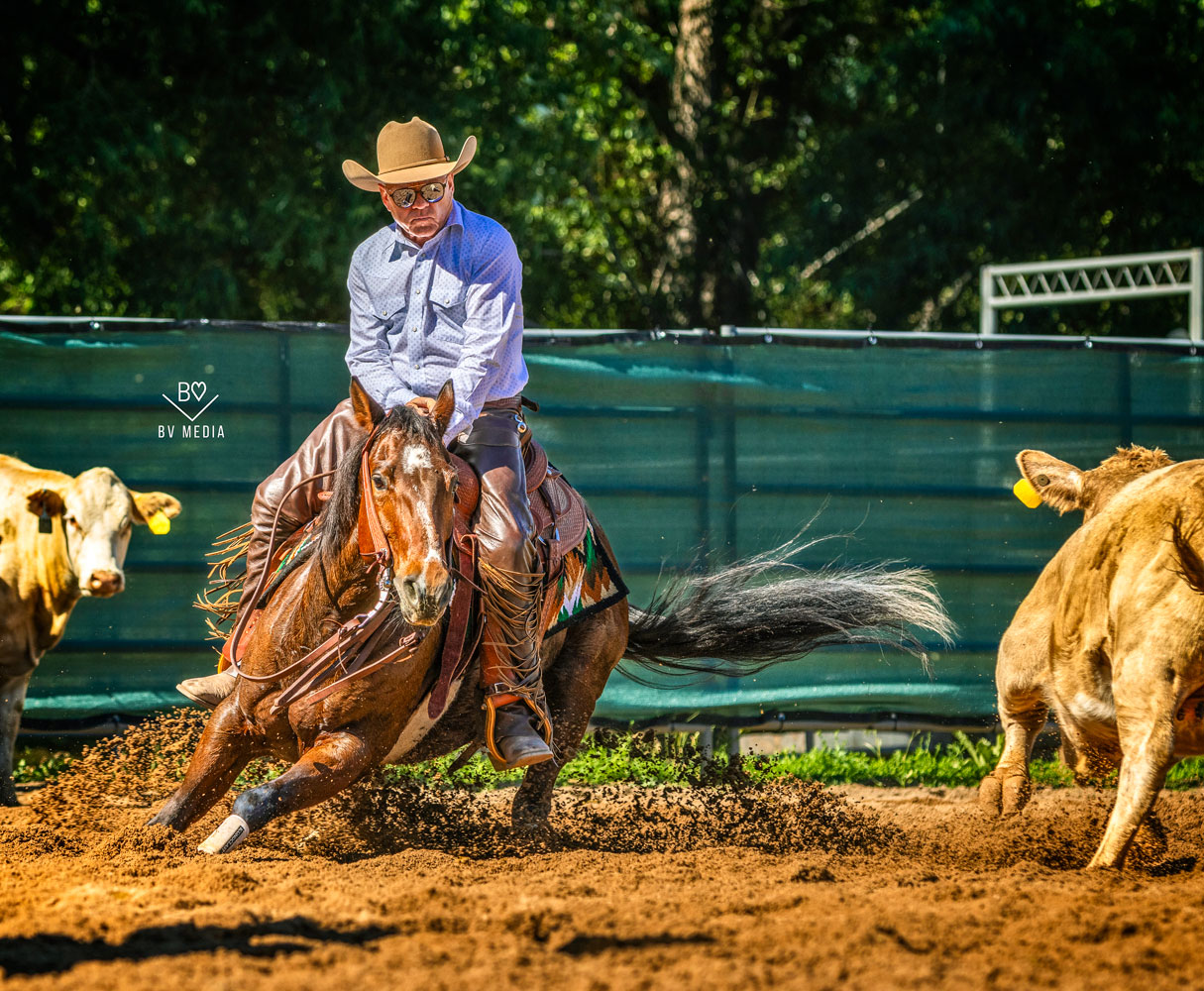
Tom Wiens at a cutting competition on his horse, An Anna Mate– aka Casey.
Douglas County’s explosive residential boom notwithstanding, ours is still a county of sprawling ranches and open spaces. Driving down Highways 105 and 83, herds of cattle can be seen grazing and moving about serenely. However, when it is time to move those cattle to another pasture or round them up, the key to everything is the cutting horse. A cutting horse is a horse with cow sense, bred and trained to separate a cow from the herd, keeping it apart for a set period of time. In fact, no ranch worth its salt can be without one in its remuda (inventory of horses).
Sedalia is home to one of the largest, state-of-the-art cutting horse breeding and training facilities in the nation: Wiens Ranch (WR). The award-winning operation is owned and overseen by banker and former state senator Tom Wiens. His family is also actively involved in the sport, including his wife, Diana, his four adult children (Lauren, Travis, Hannah, and Sarah) and his nine grandchildren.
WR’s legacy is known across the cutting horse industry and its impact on the breed has been vast. Tom was responsible for owning and cultivating the dynasty of The Smart Look, one of the top maternal equine pedigrees of the cutting horse world. Tom has bred and raised horses with earnings in excess of $1.2 million; producing great horses like WR This Cats Smart, Smart Lookin Hi Brow and One Smart Lookin Cat. For a cowboy, a skilled cutting horse makes his/her job easier, safer and more efficient. The cost of one cutting horse can run between $10,000 and $100,000 or more.
Craig Morris, world-renowned rider and trainer at WR, directs the cutting horse program. With his assistance, equine candidates are selected for breeding based on bloodlines and performance in arenas across the country. Genetics is a calculated process and, as with thoroughbreds, ratcheting up the odds of success is smart business. The training regimen is intended to give the horse confidence by working them through maneuvers and cues necessary to ensure the horse will willingly respond, when necessary. This includes anticipating a cow pivoting on a dime, mirroring its every twist. Once a cow has participated in a competition, it is no longer able to be used in future competitions, making it challenging for show producers like WR to supply fresh cattle each time.
Cutting horse competitions are held all over the country, the very first held in Fort Worth, Texas in 1911––and the competition ROI can be significant. In 2024, The purse for the National Cutting Horse Association (NCHA) Futurity exceeded $5 million, surpassing the $5 million record-setting purse for the Kentucky Derby.
WR hosts cutting horse competitions three times per year (May, July and September) that attract ranch owners from all over the country. To watch is captivating and exhilarating sport, especially when observing a horse staring down his target.
Tom has his sights set on amassing enough NCHA wins to be inducted into the NCHA Hall of Fame; he is more than half way there.
Tom’s daughter, Hannah Nelson, a first-class cutter herself, markets and brands the WR business. Her passion comes naturally as it is “all about the charm and winsomeness of the horses.” Proof of her bias is her comment that “life is best viewed from between a horse’s ears.”
For more information on WR or for the dates of the 2026 competitions, visit wiensranch.com.
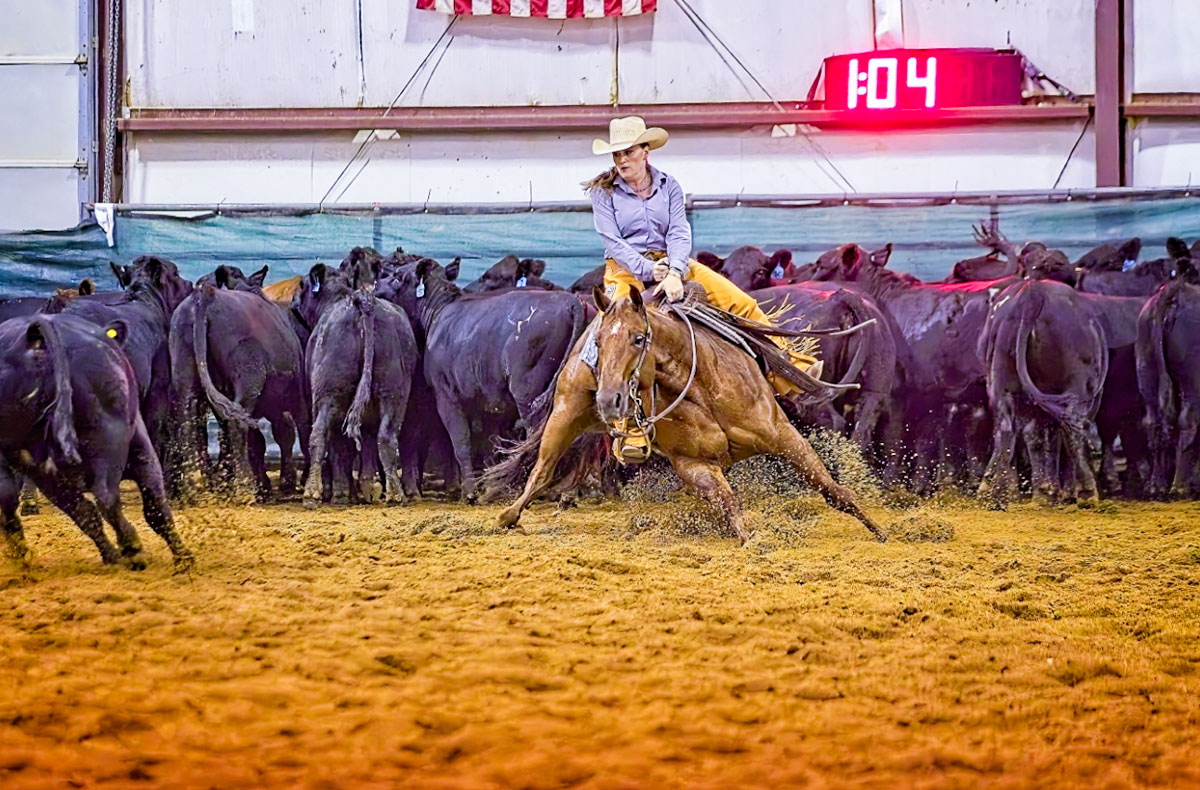
Hannah Nelson exhibiting extreme athleticism and skill maneuvering her horse while cutting during a competition.
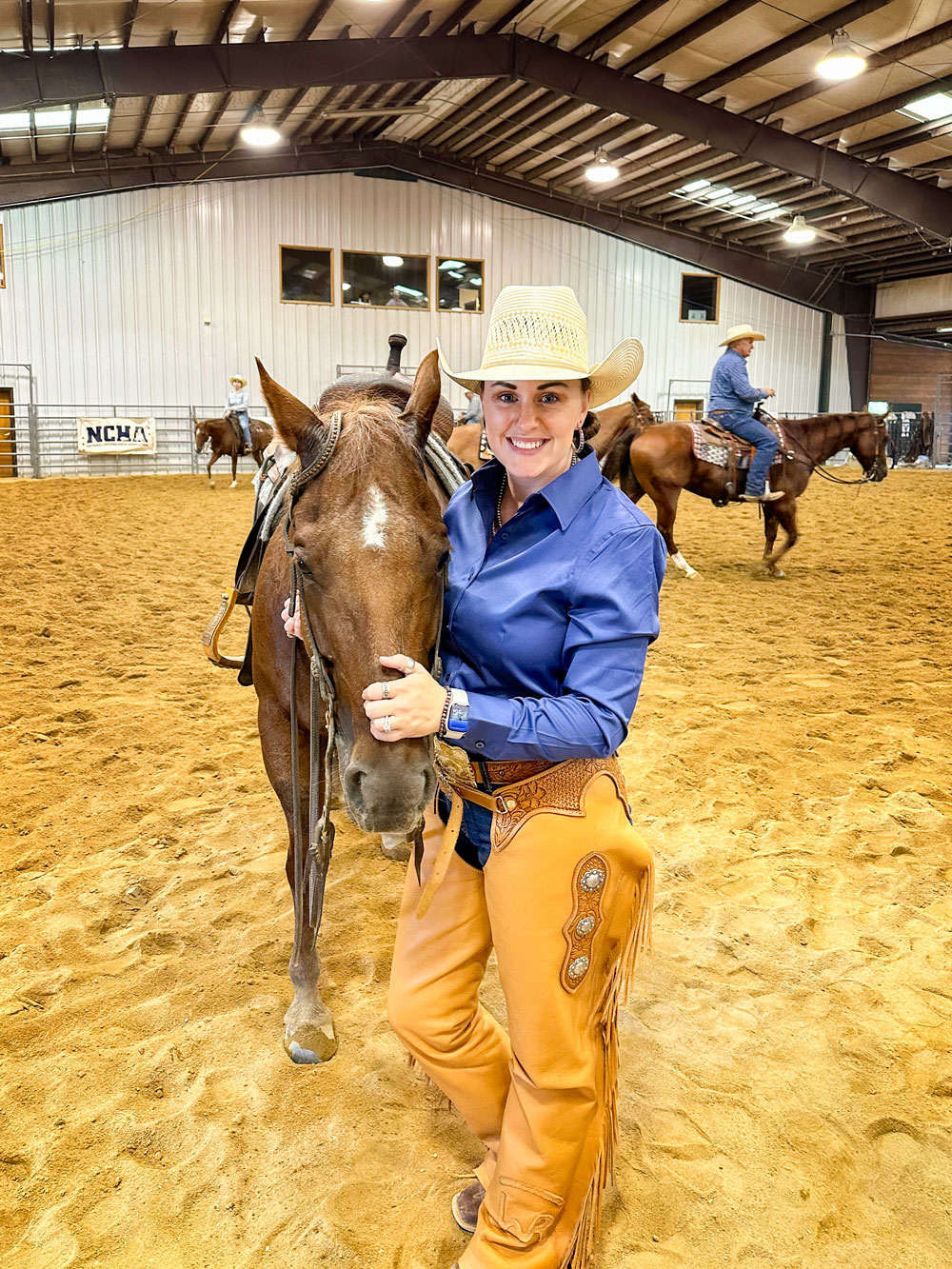
Hannah Nelson with her horse, Got Her Von – aka Von, at the indoor arena at Wiens Ranch.
By Joe Gschwendtner; photos courtesy of Peter Anderson Photography