All about holly
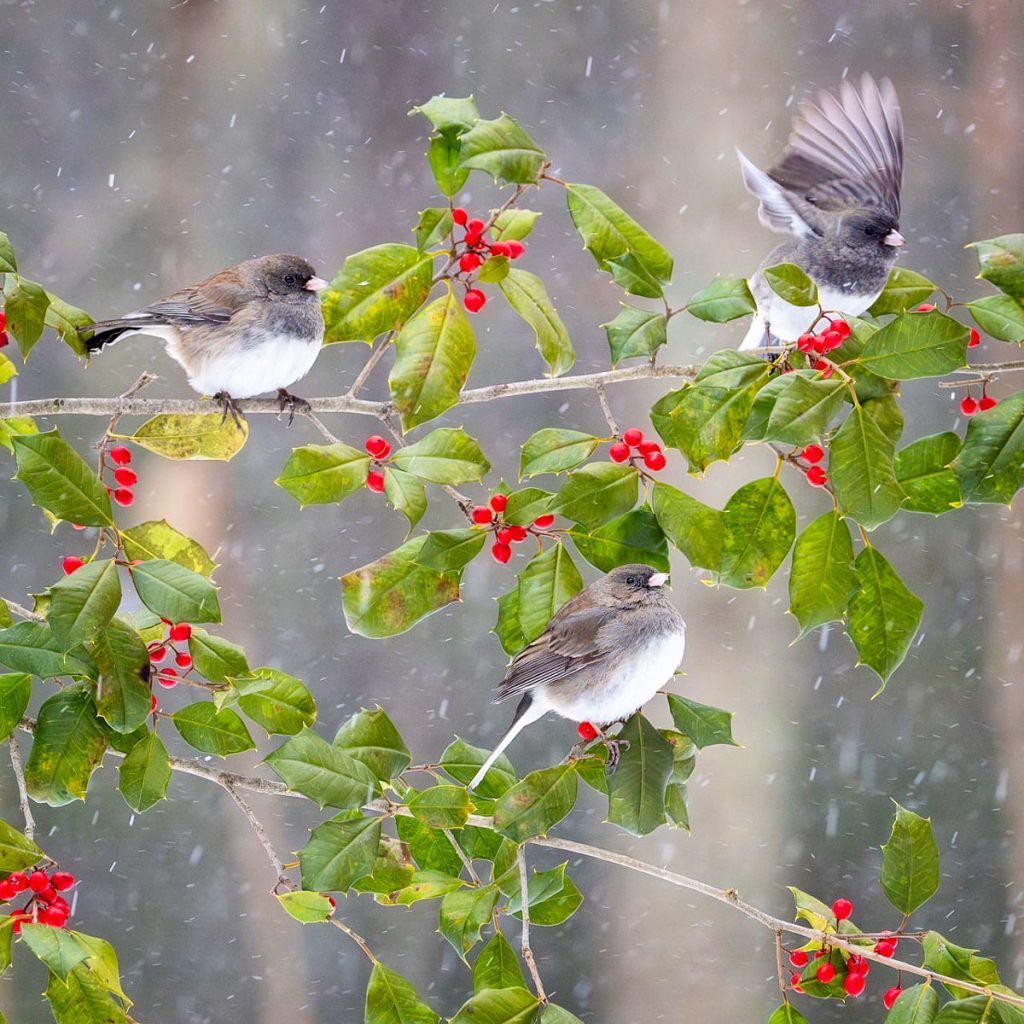
Juncos on holly branches. Holly provides food and shelter for a variety of birds and mammals in winter.
Beautiful and festive, holly is a staple of the holiday season. Legend has it that holly is associated with Christmas due to the spiny leaves representing Christ’s crown of thorns and the red berries representing drops of blood. The evergreen leaves symbolize life continuing through the harsh winter. There is also a tale of a holly bush protecting baby Jesus with its sharp leaves, and in return the plant being blessed to be an evergreen. But there is more to holly than Christmas—native holly provides an excellent habitat for a variety of wildlife year-round, and it is often planted in gardens as an ornamental tree.
Worldwide, there are more than 400 species of holly, with more than a dozen native to the United States. Holly, usually an evergreen tree or shrub but with a few species that are deciduous (shedding leaves seasonally), can be found throughout the southeastern United States, as far north as Massachusetts and as far west as Texas. One of the most common varieties in the States is American holly, which can grow 40 to 60 feet tall. It is a slow grower that forms a pyramidal shape as it matures. American holly is the official state tree of Delaware. Other holly species native to the United States include the inkberry, catberry, winterberry and possumhaw.
There are no species of holly native to Colorado; holly does not do well here because all species prefer moist, acidic soil and most prefer warmer temperatures.
Holly is known for its leathery leaves with spiny tips. American holly leaves are less glossy than European holly, and a bit larger and lighter and brighter in color. The red “berries” of a holly plant are technically drupes, a type of fruit with a woody stone surrounding a seed in the middle (peaches, cherries and pecans are also drupes). Only female holly plants produce berries, though they need a male plant nearby.
Holly provides an important source of nutrition for wildlife in winter. Many species of birds feed on holly berries, including cedar waxwings, cardinals, robins, bluebirds and mockingbirds. Deer, bears and small mammals eat the berries and sometimes the spiny leaves. Note, however, that holly berries are toxic to humans and pets. The dense leaves of the holly tree can also provide cover and nesting spots for birds and other wild animals during snowstorms. Bees, moths and other pollinators feed on the pollen and holly trees are host plants for certain butterflies.
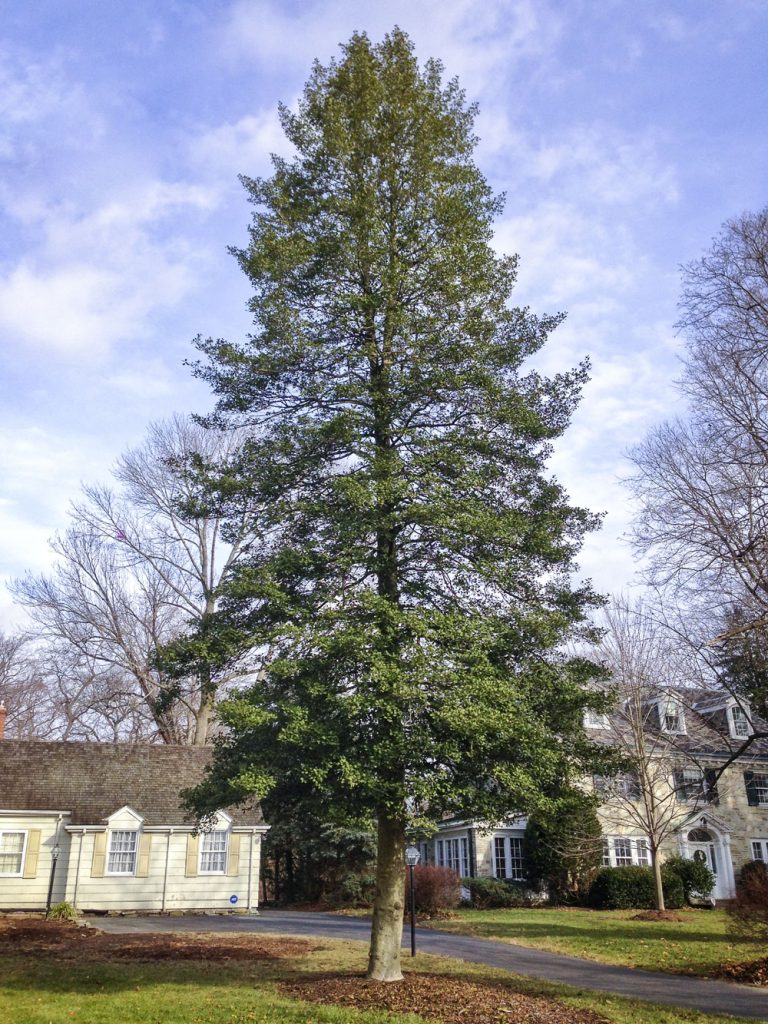
An American holly tree in Ewing, New Jersey. Holly trees can reach more than 60 feet in height and often form a pyramidal shape.
By Rachel Poe; photos courtesy of Famartin and Trek Jason