Colorado living: Chickadee-dee-dee
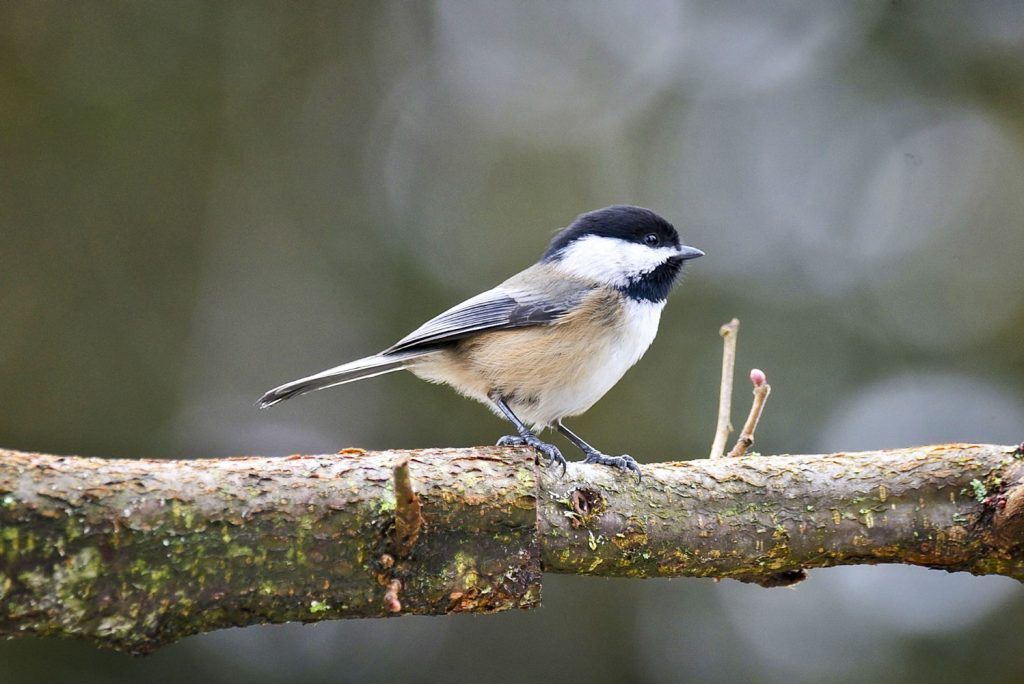
Black-capped chickadees are found throughout Colorado. They can be spotted year-round.
On a quiet day you just might hear it: “chickadee-dee-dee.” That distinctive call that also names its source, the little bird called the chickadee. Colorado is home to two species of these songbirds: the black-capped chickadee and the mountain chickadee.
The black-capped chickadee’s range is roughly the northern two-thirds of North America, where they are mostly found at mountain elevations ranging from 5,000 to 9,000 feet. Black-capped chickadees have gray tails and backs, white bellies and cheeks, and black bibs and “caps.” Their wings are buff-colored, with white and black streaks, and their bills, legs and feet are dark. They are 4.75 to 5.75 inches long, with wingspans of 7.5 to 8.5 inches. Males, females and juveniles all look similar, and an adult’s weight is about a third of an ounce.
The mountain chickadee is a close cousin of the black-capped chickadee. Mountain chickadees are found in the western United States and Canada in mountainous areas with conifers, at elevations ranging from 6,500 to 12,000 feet. Roughly the same size and color as black-capped chickadees, mountain chickadees are distinguished by a white eyebrow that breaks their black caps. They also have longer bills than the black-capped chickadees.
The calls of both birds are very similar, but the black-capped chickadees’ buzzy “chickadee-dee-dee” and the mountain chickadees’ hoarse “chick-a-zee-zee, zee” are not their only calls. They also voice a whistled “fee-bee,” with the second note often lower and doubled in the mountain chickadees’ version.
Both species lay white eggs, usually with fine, reddish-brown dots. Black-capped chickadees generally lay six to eight eggs, while mountain chickadees usually have seven to nine. Young black-capped chickadees leave the nest at about 16 days old. Young mountain chickadees leave the nest when they are about 19 to 21 days old. Black-capped and mountain chickadees will cross breed with each other.
Both birds eat insects, seeds, berries and small fruits. They often visit winter bird feeders and are known to store food to eat later. They are lively birds that perch on twigs and small limbs, and even sometimes hang upside down to get at the undersides of branches.
For more information, visit audubon.org, cpw.state.co.us and allaboutbirds.org and search “chickadee.”
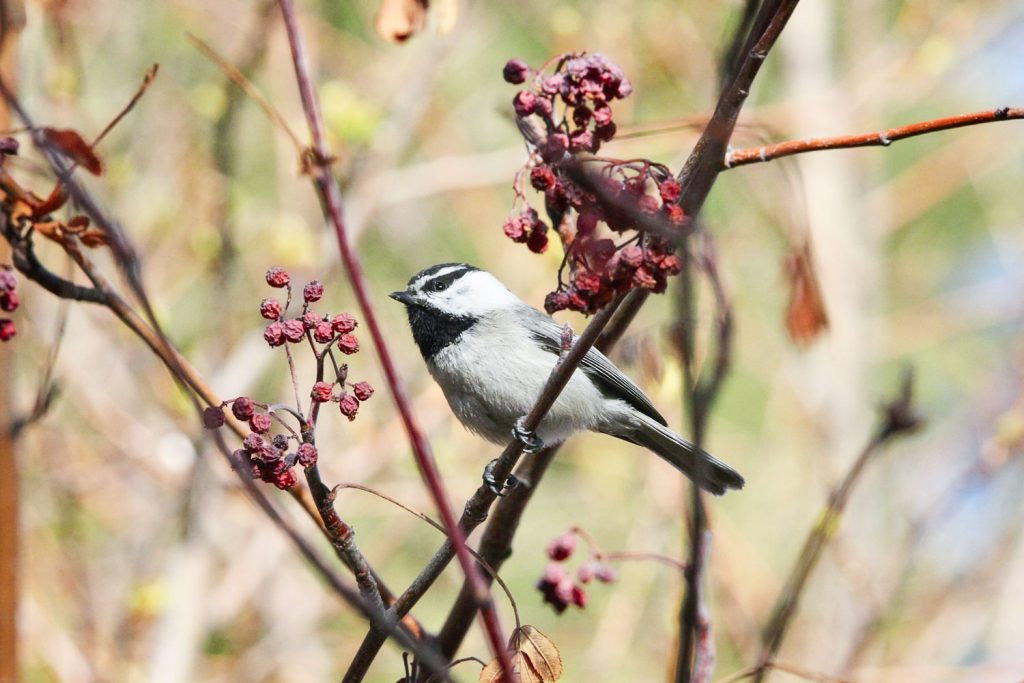
Mountain chickadees are found in all the state’s mountain ranges. They also can be spotted year-round.
By Susan Helton; courtesy photos