Staying safe from scams
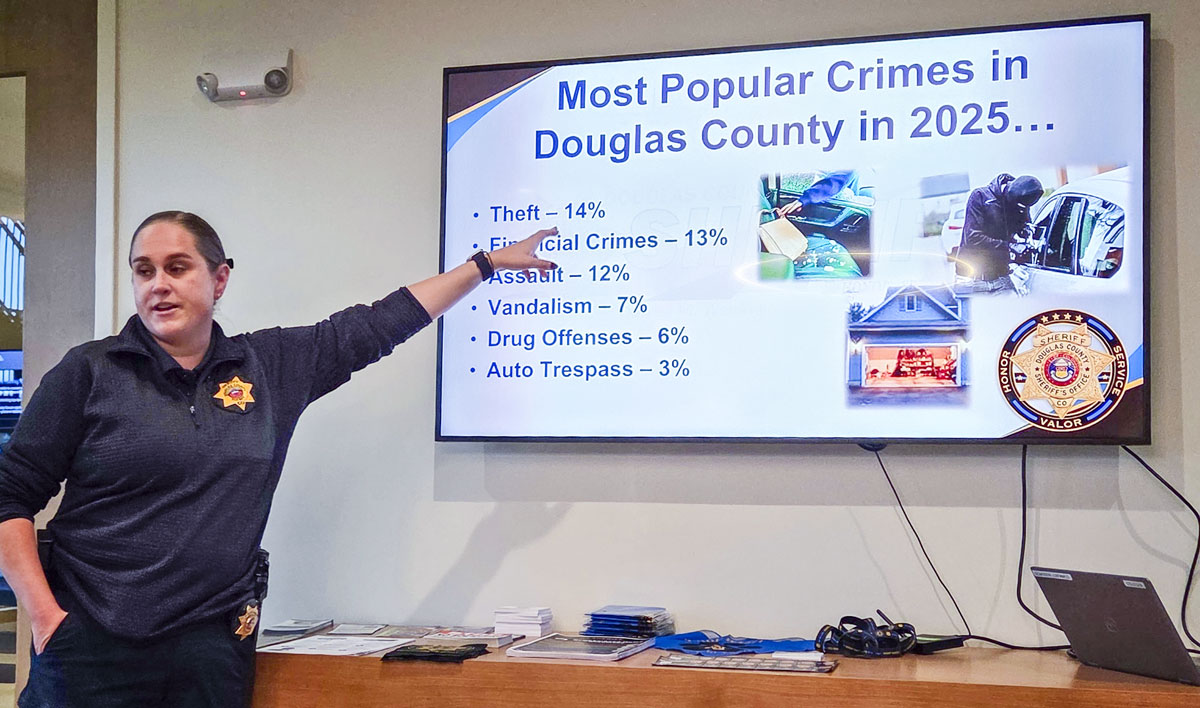
Last month, DCSO’s Community Resources Deputy Kathryn Nicola informed The Canyons Neighborhood Watch group on the dangers of scams.
As methods of deception become more sophisticated every day, anyone, even the most vigilant, can fall victim to scams, fraud and identity theft. A common misconception is that the elderly are the most-targeted demographic.
“Scams can happen to anybody,” said Deputy Kathryn Nicola, who is the community resources deputy and a public information officer with the Douglas County Sheriff’s Office (DCSO). “The age group 30-50, is being scammed the most often, but seniors are scammed the severest, sometimes losing their life savings.”
Nicola said all scams, whether in person, by phone or online, have one common objective: taking advantage of the emotions of the targeted individual. As emotions take over, reason shuts down.
According to Nicola, scammers employ a variety of deceptive tactics. They create a sense of urgency, invent fake emergencies and reward cooperation with positive comments and promises of resolution.
“A scammer wants you to miss the red flags. They want you to get it done right now,” Nicola added. “Don’t let your emotions get the best of you. Slow it down. That’s the biggest thing you can remember.”
Nicola cautioned to never provide personal information or send money to someone who has initiated contact with you, either via phone or email. If uncertainty exists regarding the credibility of a phone call, email or text, Nicola advised to do a bit of detective work: make time to look up the phone number to verify if it is a legitimate number.
Nicola said that advanced technology has enabled phone thieves to manipulate caller ID displays. Known as caller ID spoofing, scammers can mimic the name and number of legitimate companies, such as banks, retailers and utility providers.
“They can fake familiar numbers and voices with AI,” Nicola explained. “It takes six syllables out of your mouth for them to be able to capture your voice and do whatever they want with it.”
Online safety tips include creating strong passwords, avoiding pop-up ads and not oversharing on social media. If an email looks suspicious or contains poor grammar, proceed with caution.
“Do not click on any link unless you are 100% sure it is legitimate,” recommended Nicola.
For additional information, or if you believe you may have been the victim of a scam, contact the DCSO non-emergency line at 303-660-7505.
Article and photo by Rachel Morris