Journey to dressage’s summit
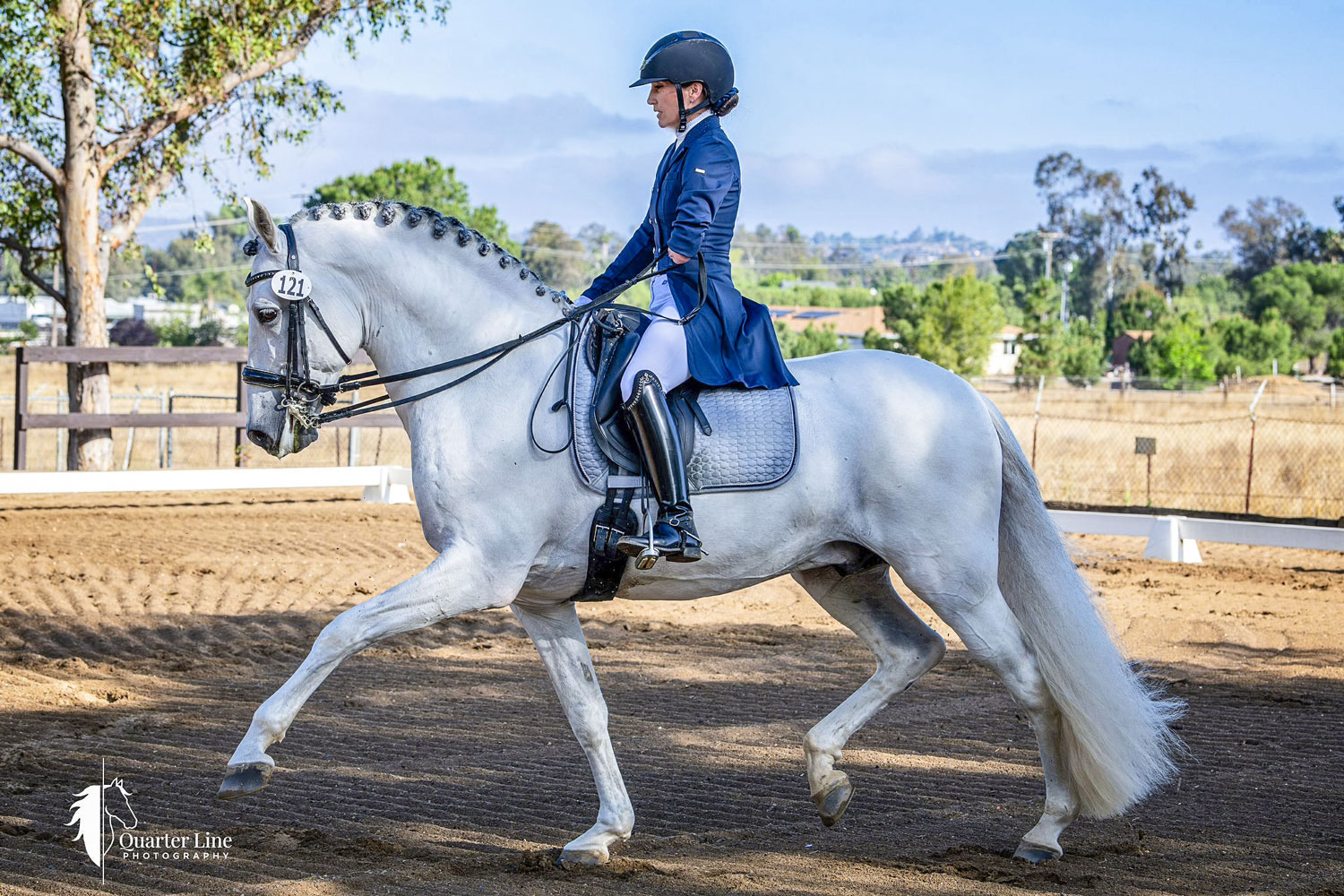
Holly Bergay’s USDF gold put her among the top five percent of dressage riders worldwide. She said, “The real success is in training and developing the horses, not necessarily in accolades or medals.”
Holly Bergay rode a lifelong passion for horses and dressage to the pinnacle of her sport, a distinction that enhanced her work as a coach, mentor and business owner. Holly, 34, owns and operates Holly Bergay Dressage in Sedalia. This summer she earned a Gold Medal Award at the United States Dressage Federation’s competition in San Diego. It requires demonstrating an exceptional level of understanding dressage technique and executing movements at progressively more demanding competitions. Riders are assessed by four different judges at four separate licensed events. The achievement places her among a minute percentage of elite dressage riders worldwide.
Dressage has been compared to figure skating, combining athleticism, grace and technical proficiency in a routine set to music and judged on technical and artistic merits. “On one hand, it’s a sport and requires a level of strength and balance and athleticism; on the other, it’s artistic that requires understanding and feel for communicating with animals,” Holly said.
Holly’s accomplishment is impressive, but also because of the challenges she had to overcome to achieve it. Born without a left hand, Holly has competed from a young age against para- and able-bodied riders (her gold was against the latter). She has been within striking distance of the award twice before, when an injury to one horse and the death of another, denied her.
The connection between horse and rider is critical in dressage, as it is in the training Holly engages in for her business. While her disability may seem a hindrance, she sees it as an advantage, allowing her to tailor training to an individual rider.
“In dressage we’re trying to train the horse in the best way possible to understand our communication with them,” said Holly. “Where I have an obvious difference that I have to adapt and train the horse with, every person has some level of that.”
Holly’s journey to gold began at age 3, when her mother got a horse for herself, which Holly quickly made her own. Therapeutic riding was recommended as a way to address Holly’s disability, but she knew early on that she wanted to compete.
Holly rose through the ranks of dressage in San Diego, a hub for the sport in America. She said she was fortunate to have excellent teachers and mentors along the way. Holly likens a part of her dressage journey to the process apprentice cooks go through before becoming a master chef. It involves long study and much grunt work under experienced teachers. “I really learned from the best,” she said.
In her scant free time, Holly enjoys travel and snowboarding.
Today, Holly has about 20 clients, ranging in age from 8 to mid-60s and in ability from casual riders to serious competitors, of whom two made national competitions this year.
“I feel like what I’m doing is helping people to do something that I find to be really beautiful,” Holly concluded. “Helping animals and humans have a connection is one of the most basic things that makes you alive. I don’t think AI can replace me.”
For more information, visit hollybergaydressage.com.
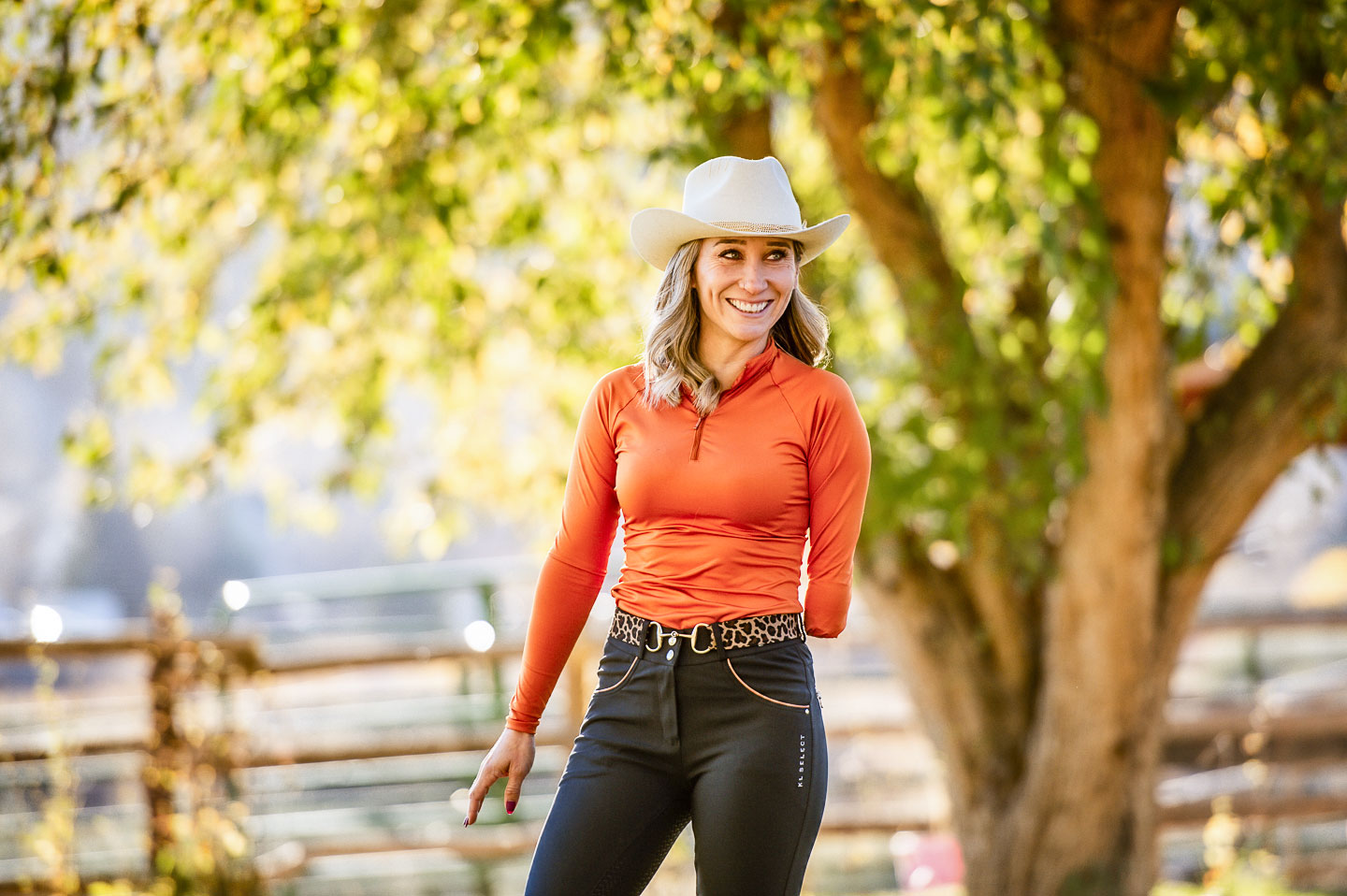
Holly Bergay, who was born without a left had, began riding horses therapeutically at age 3, and later competed against para- and able-bodied riders.
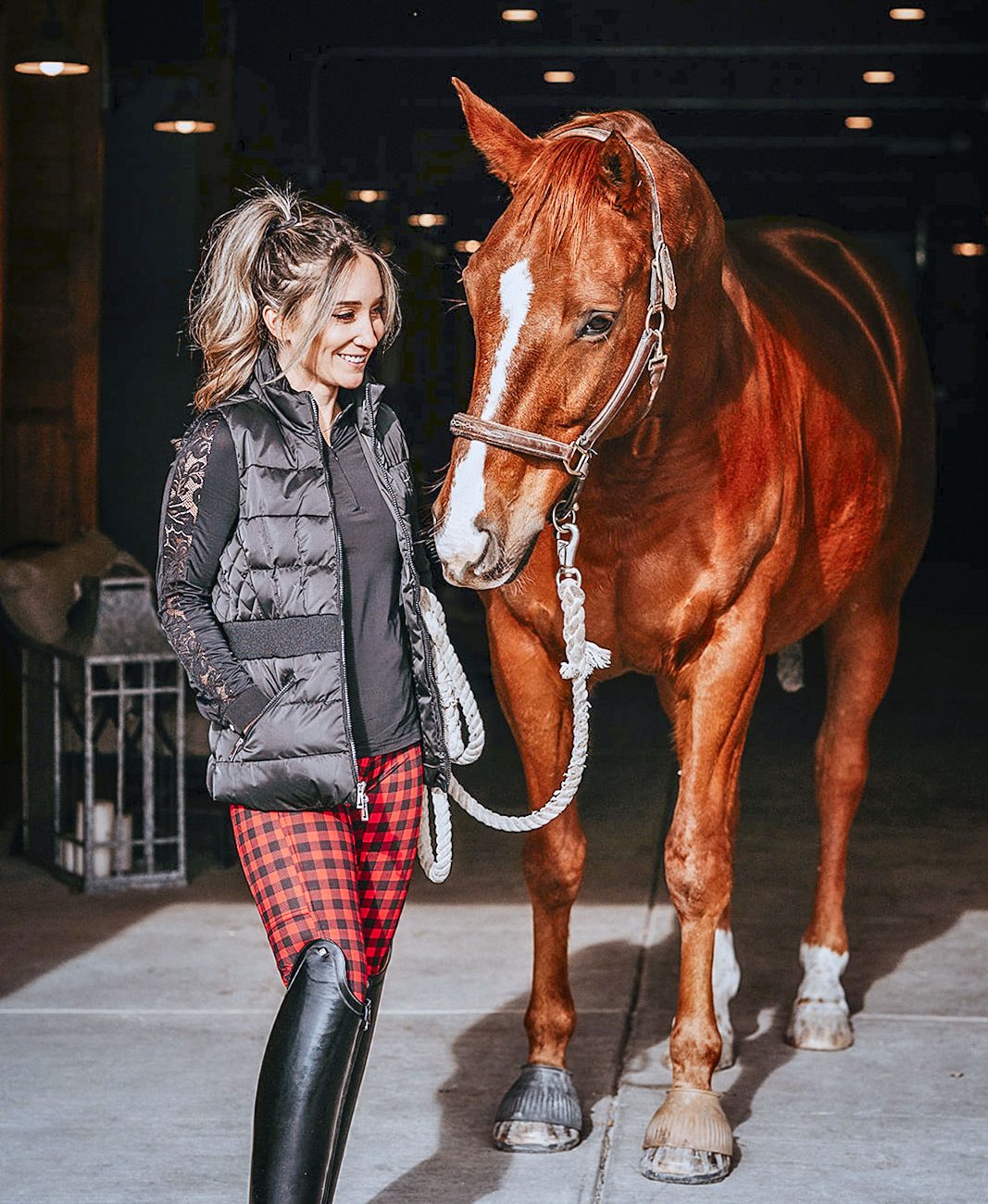
Holly Bergay built a successful coaching and riding business based on more than a love of horses. “It’s not enough to be great with the horses. You have to be great with the people who come with the horses.”
By Ken McConnellogue; photos courtesy of Quarter Line Photography and Bianca McCarty and The Perfect Fit Saddlery