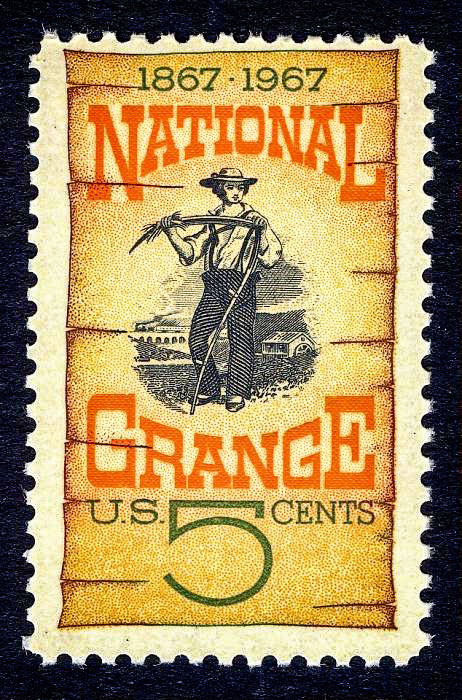
The National Grange in pioneer history

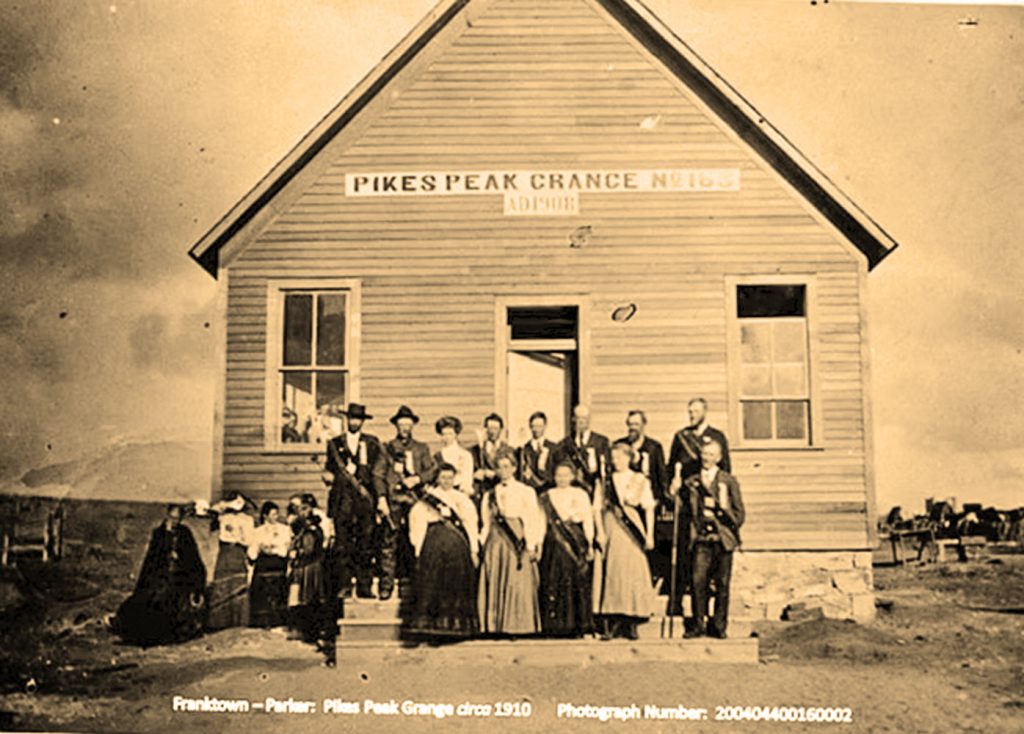
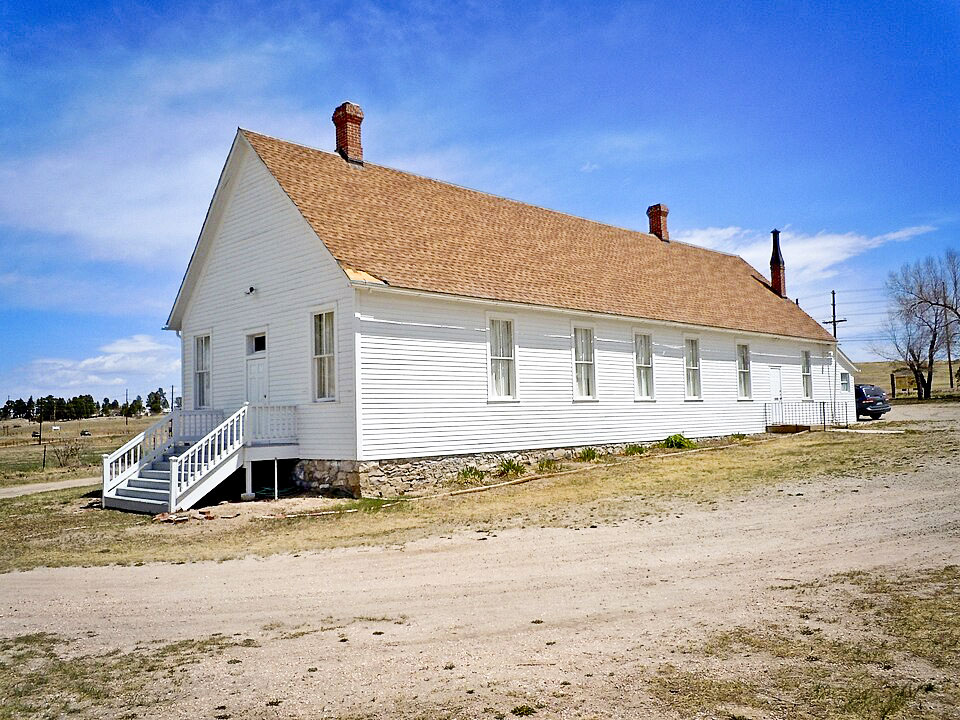
Pikes Peak Grange #163 in Franktown, circa 1910 (above) and 2011 (below). The building was built in 1909 and is listed on the National Register of Historical Places.
As vigorous pioneers stretched our westward expansion across the prairies of America, one organization played a starring role in their agricultural successes and social welfare: The National Grange. A grange is defined as a meeting place or group associated with farmers or rural communities.
Officially known as the National Grange of the Order of Patrons of Husbandry, the organization was founded in 1867 with the purpose to promote agriculture and community ties. Although once with as many as 858,000 members, 140,000 people today remain involved across the United States with a focus from local to national issues in agricultural.
It is hard to criticize the goals of the Grange, beginning with motto: “In essentials, unity; in non-essentials, liberty; in all things, charity.” Women were equal members since inception and children can be members as part of the Junior Grange program.
The national founder, Oliver Kelley, recognized a compelling need to bring “progressive agriculture” via mutual cooperation. He sold his concept to President Andrew Johnson, and the first Grange was founded in Fredonia, New York. Chapters were supported solely by dues.
Farmers of that day were often small-time players in a generally unregulated world of commerce, separated by great distances. They struggled against the railroads and the high shipping rates charged against them. The conflict was especially notable after the Civil War when farmers relied on railroads to transport their crops to markets.
Functioning early on as cooperatives, grange members massed the buying power to create alliances that brought the prices of supply commodities down, lowered premiums on insurance against calamities and provided pressure on the railroads to lower monopolist pricing. So bad was the blood between the Granges and railroads the threat of spies at their meetings was real and thus passwords were used by members to gain entry. Wholesaler Aaron Montgomery Ward was an early champion of the Grangers.
Financial mismanagement and embezzlement ravaged the Grange organization in the late 19th century and put a damper on what had been astronomical growth. The 20th century was not much better. Though our present farmers are among the world’s most productive, post-World War II consolidation and corporate consolidation trends massively affected the number of Grange members. In fact, American farmers, once a full third of our national population at the century’s turn, are a mere one to two percent today.
Those Grangers remaining are steadfast, still driven by social, professional and legislative goals. Colorado benefits by a bimonthly newsletter published in Hesperus, called The Colorado Granger, updating members on state agendas, initiatives, trends and both local and state events. This year’s 160th National Grange Convention was held over five days in Broken Arrow, Oklahoma, in November.
There are two active Granges in Douglas County. Pike’s Peak Grange #163 is in Franktown. Its hall, built in 1909, sits by itself close to the Hidden Mesa Open Space on Parker Road. The venerable old building is available for rental. See next month’s article on the rich history of Sunflower Grange #162 in Sedalia.
For more information visit pikespeakgrange.org and nationalgrange.org.