Colorado living: State symbols & emblems, part 6
In recognition of 2026 marking 150 years of Colorado statehood, this final segment of the state’s official symbols and emblems looks at Colorado’s official fossil, gemstone, mineral and rock: the stegosaurus, aquamarine, rhodochrosite and Yule marble, respectively.
©Denver Museum of Nature & Science
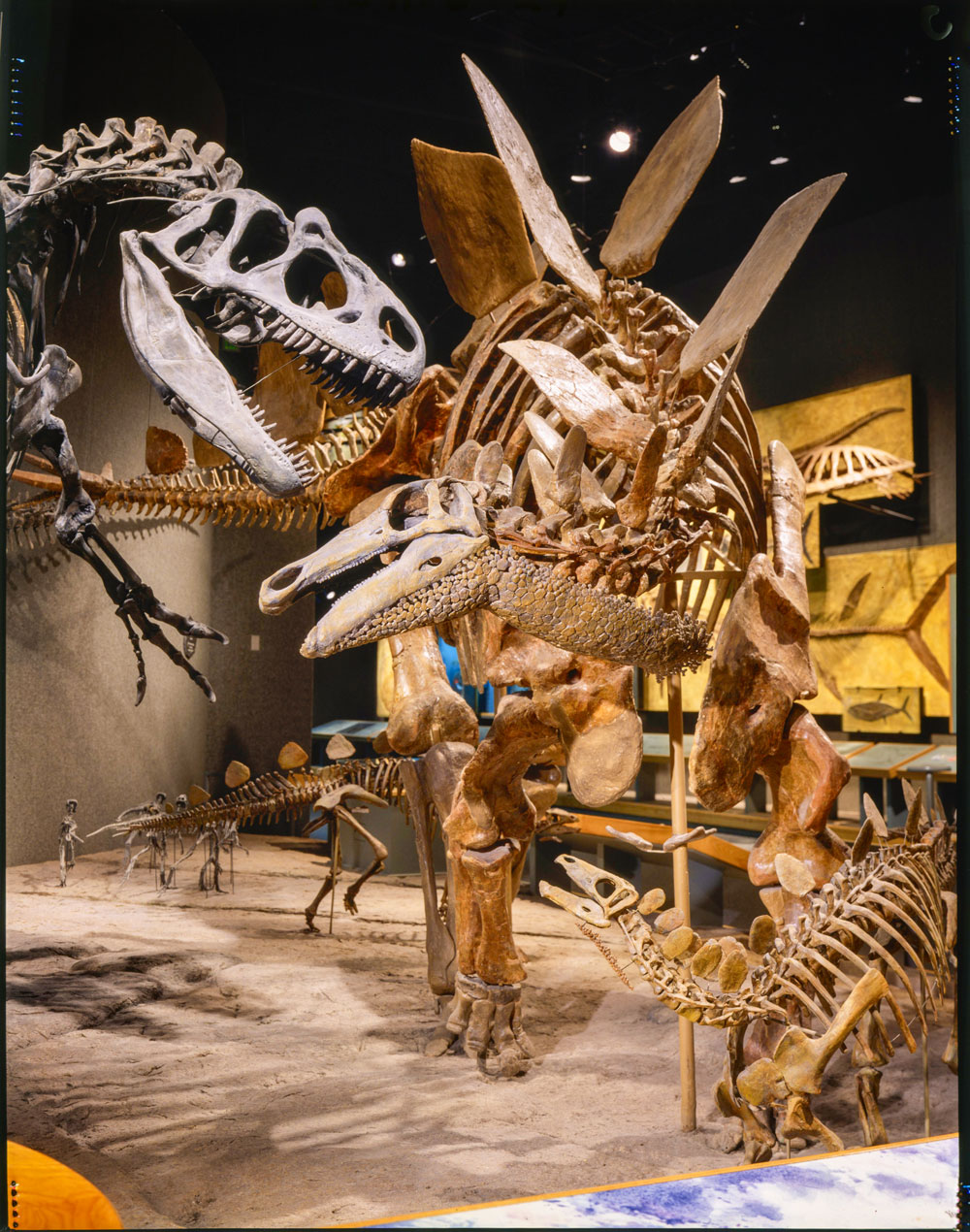
In 1982, Governor Richard Lamm declared the stegosaurus Colorado’s official state fossil. The stegosaurus was an herbivorous dinosaur with two rows of large bony plates along its back, four spikes on its tail, a small narrow skull and front legs much shorter than the back legs. Its name comes from the Greek words for roof and lizard. The dinosaur lived during the Jurassic Period, roughly 150 million years ago. It could grow up to 30 feet long and scientists estimate it weighed several tons. The first known stegosaurus fossil was found near Morrison in the mid 1870s.
©Denver Museum of Nature & Science
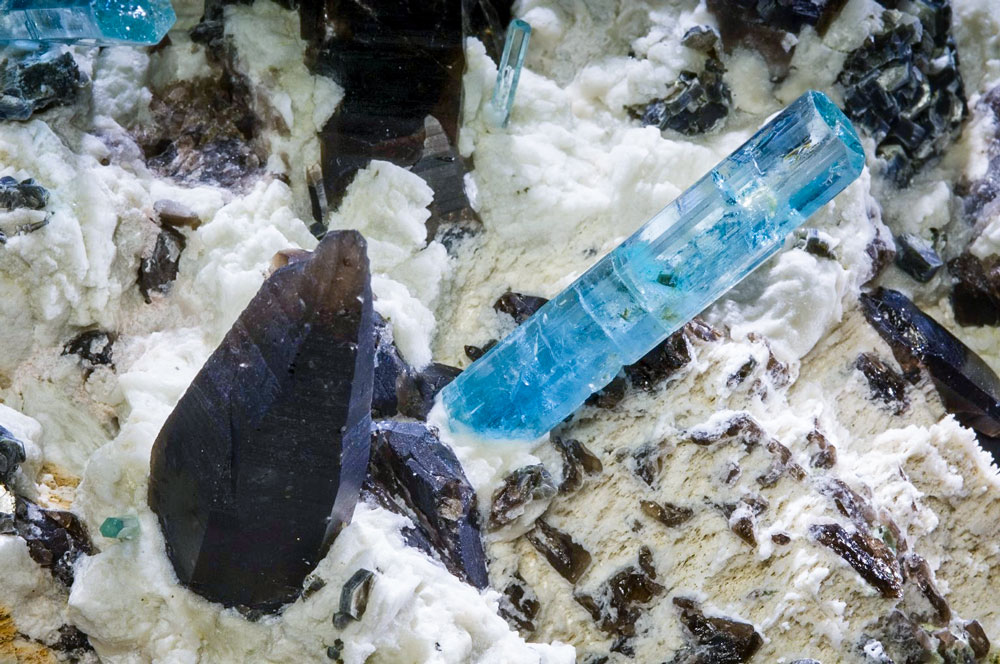
The Colorado General Assembly adopted aquamarine as the official state gemstone in 1971. Aquamarine is a pale green-blue to blue gemstone, a color variety of the mineral beryl. Its name comes from the Latin for seawater, and it is the modern birthstone for March. In folklore, it is said to keep sailors safe. A notable source for aquamarine in Colorado is Mount Antero and its neighboring peak Mount White, located southwest of Buena Vista. With elevations of 14,276 feet and 13,667 feet respectively, these peaks are the highest sources of gem-quality aquamarine in North America. The largest known aquamarine miarolitic vug (crystal-lined cavity), discovered in 2004 near the summit of Mount Antero, measures 37 by 25 inches.
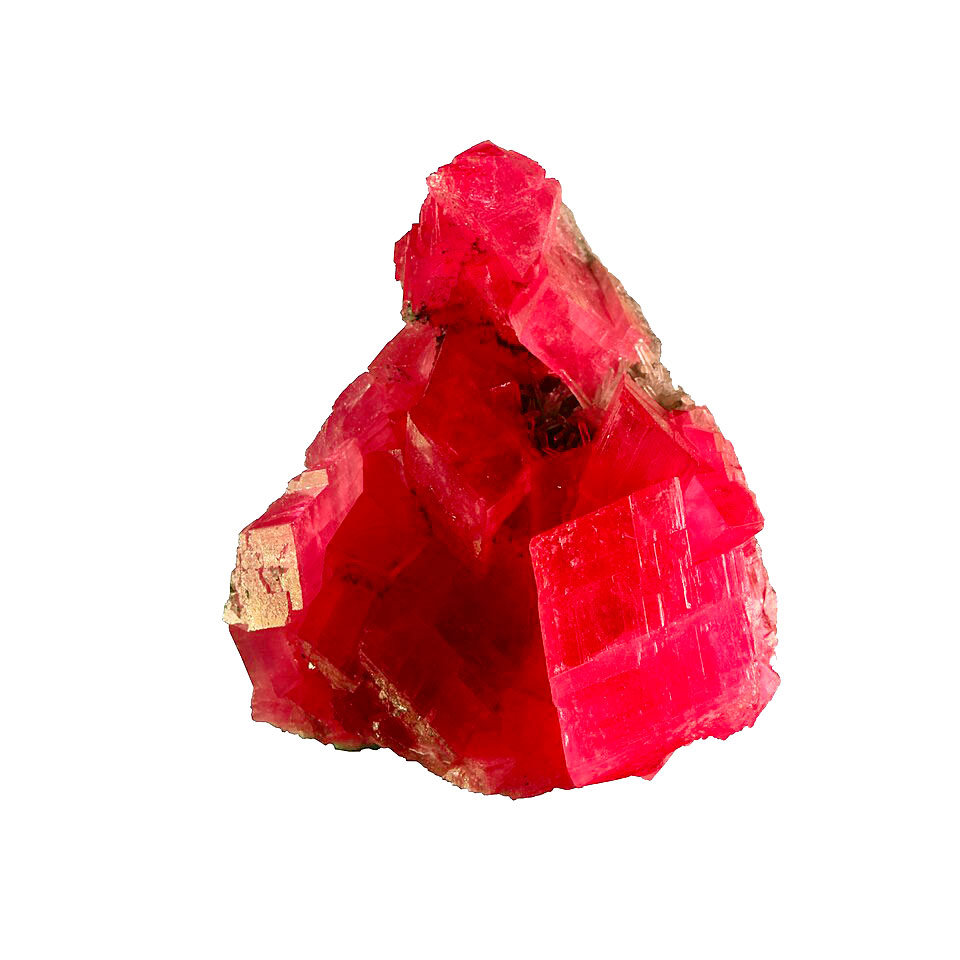
In 2002, the General Assembly passed a bill designating rhodochrosite as the state mineral. Rhodochrosite is a soft mineral that is usually found in an opaque, light pink to red banded form. It is often associated with silver deposits. Well-formed rhodochrosite crystals are very rare, but a translucent red variety is found in the Sweet Home Mine, near Alma, one of the few locations in the world where such crystals can be found. The largest known rhodochrosite crystal, the 6.5-inch Alma King, was collected in 1992 from that mine.
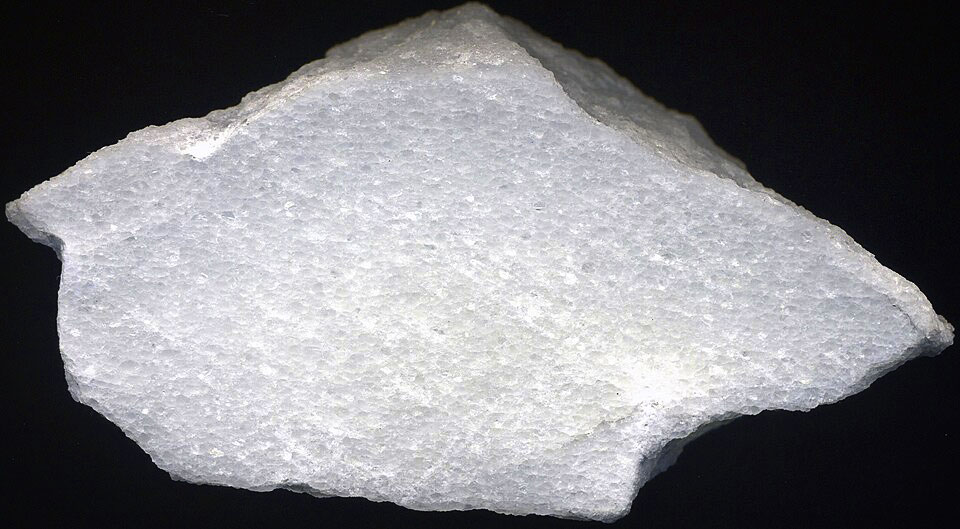
Governor Bill Owens designated Yule marble the state rock in 2004. Yule marble is very white, nearly pure calcite, with only minor inclusions of mica, quartz and feldspar. The marble comes from the Yule Marble Quarry, about three miles south of Marble, a town south of Glenwood Springs. The quarry is the only major source of marble in Colorado. Because of its purity and quality, Yule marble has been widely used in prominent structures across the nation and in Colorado, including a 124-ton block—later cut down to 56 tons—for the Tomb of the Unknown Soldier in Virginia, and 140,000 square feet of marble for the floors of the Colorado State Capitol building in Denver.
For more information about these official symbols, visit coloradogeologicalsurvey.org and search for the symbol in which you are interested, or visit archives.colorado.gov/collections/symbols-emblems. To learn more about stegosaurus fossils in Colorado or Yule marble visit coloradoencyclopedia.org and search “stegosaurus” or “marble.”

The state dinosaur has an official license plate.
By Susan Helton; courtesy photos