Westcreek’s first governor

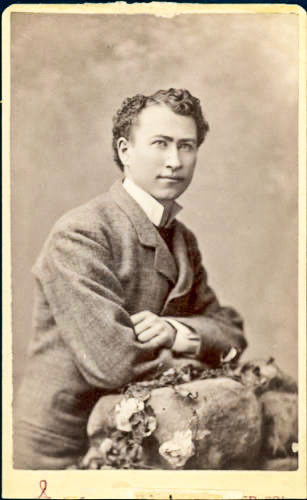
High school graduate Elias M. Ammons in 1880 at Denver East High School.
At last census, Westcreek, an unincorporated community in Douglas County, had about 120 citizens. Nestled along Colorado State Highway 67, a scenic drive connecting Woodland Park and Sedalia, Westcreek paradoxically accounted for two Colorado governors: Elias M. Ammons and later his son. What prepared Elias for greatness?
The Ammons were pioneers relocating from Franklin, North Carolina, in 1870. Elias was 10 years old and accompanied by his three sisters, Theodosia, Farita and Annie. The family settled first near Deer Creek in Jefferson County. Their father, Jehu Ammons, was a well-educated man, yet history suggests he did not prosper.
Elias’s first five years of education were at the local school. A robust young man, he is said to have “skidded the first 5,000 ties for the South Park Railroad” in the Buffalo Creek area. “Skidding” is the process of dragging the unwieldy railroad ties, each weighing up to 300 pounds, into place. He also drove a team of oxen, hauling cordwood to the local lime kiln. Curiously, despite some brutal winters, Elias refused to wear gloves or overshoes. By age 15, Elias was shipped to Denver to gain a better education. He graduated from Denver East High School at age 19. While a student, a serious case of the measles impaired his eyesight permanently.
After graduation, Elias kicked around a bit. He was paid by the City of Denver to light its gas lamps. He was also a scrapper, scouring up discarded tin cans for recycling. He hunted deer to earn $1.50 per head. Unfortunately, a misguided bullet found its way to his head and the recovery ended that chapter of his career. Forced to alter his lifestyle, Elias found a position with the Denver Tribune in 1880. Performing brilliantly, over the following five years he was promoted first to city editor and then associate editor. Seemingly headed to the top of his trade, Elias had to give up journalism entirely due to his erratic vision.
Having met known historian and journalist Thomas Dawson, Elias partnered with him to purchase the Ox Yoke Ranch in Westcreek. In his first run at serious ranching, Elias brought in cattle from Kansas. Unacclimated to Colorado’s seasons and having eaten poisonous loco weed, most died. Local records note that because of, rather than in spite of this experience, he became a very successful cattleman. Not long after, Elias and Thomas acquired substantially more acreage and cattle. By 1898, they owned another 1,000 acres abutting Horse and Lost Park Creeks and would sell some 1,400 head of cattle for $28 a head that year.
In 1889, Elias married Elizabeth Fleming from Indiana. A graduate of Colorado Women’s College and noted equestrienne, the couple would welcome five children, future governor Teller among them. Teller would later fight in World War I, finding his way to the French battle front in 1917.
Meanwhile, politics beckoned. Elias would rise to speaker of the Colorado House of Representatives and later become a state senator. By 1913, he had been elected the 19th governor, regularly distinguishing himself via a variety of progressive issues with special attention to education. All looked good until, as Wilbur Fiske Stone’s History of Colorado reports, “There occurred the worst industrial disturbance in the history of the state.”
Governor Ammons was presiding when in 1914 the Ludlow Massacre ensued, a clash between federal troops and unionized coalfield workers of the Colorado Fuel and Iron Company (CF&I). Eleven children and 10 adults died. Elias was accused of sympathizing with CF&I. The event is considered one of the largest labor conflicts in our nation’s history. Sadly, after Ludlow, Ammons was criticized by both sides in the strike, which likely was a factor in his decision not to seek a second term in 1914 and never again to seek public office.
After the governorship, Elias returned to private life until his death in 1925.
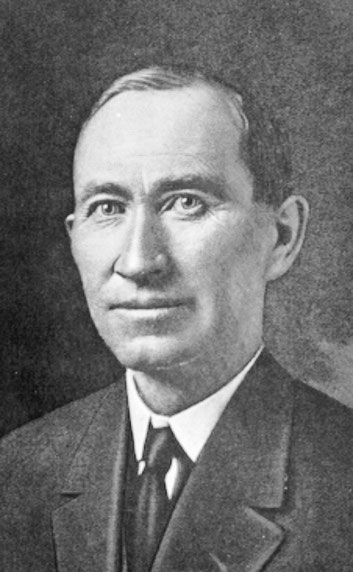
Elias M. Ammons (1860-1925) of Westcreek was a successful journalist and rancher before becoming Colorado’s 19th governor.
By Joe Gschwendtner; photos courtesy of Colorado State Archives and Denver Library