Milkweed: Food for butterflies and more
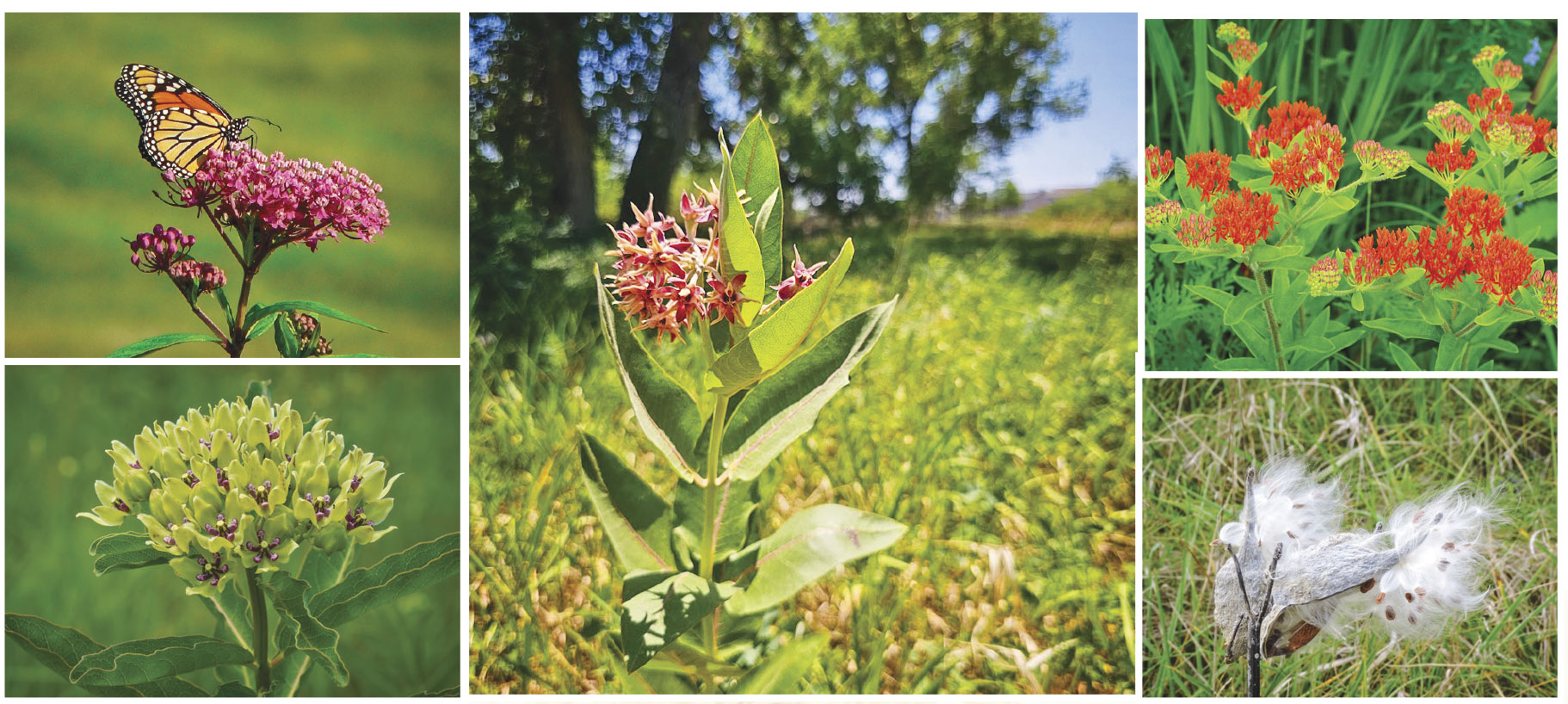
Center: Showy milkweed growing along the Cherry Creek Trail. Top left: Swamp milkweed with a monarch butterfly. Lower left: Green or spider milkweed. Top right: Butterfly milkweed. Lower right: An open milkweed seed pod.
There are 10 species of native milkweed plants found in Douglas County. The most common is showy milkweed, which features a ball-like cluster of pink and white star-shaped flowers. Milkweeds feed many pollinators but are the only host plant to monarch butterflies, whose numbers are declining. In recent years there has been a push across the country to cultivate the flowers to support the butterflies.
Milkweeds are generally tall plants, two to four feet high, with narrow leaves, complex flower structures and generous supplies of nectar. They are frequently found near roadsides, though they have a varied habitat. Their name comes from the milky substance, called latex, that is exuded when the plant is damaged, a defense to limit damage done by caterpillars. This substance is irritating to skin and toxic if ingested. Fortunately, milkweed tastes quite unpleasant to animals, and will generally be avoided by livestock if other forage is available.
Other milkweeds that may be spotted in Castle Pines include swamp milkweed, with clumps of light to dark pink flowers and a favorite of monarchs, along with showy milkweed; plains milkweed, spider milkweed, also known as green milkweed, with greenish flowers with bits of purple; and butterfly milkweed, which has bright orange flowers and is a favorite of many moths and small bees.
Milkweed is a perennial that forms large, green, spiky, horn-shaped pods in the fall that are filled with seeds attached to fluffy tufts of silky floss. After the pods turn brown and burst open, the floss helps the seeds disperse in the wind, much like dandelions. These seeds can be collected (the floss is not needed) and sowed in fall. If you prefer to sow in the spring, store the seeds outside or in the refrigerator, as they need to experience a period of cold before they will germinate.
Blooming season varies by species but is generally from late spring to late summer. Though the leaves and stems die back before winter, that plant regrows from the root system each year.
Besides monarchs, many other species eat milkweed plants, including pollinators such as moths, butterflies, bees, wasps and ants. There is even a red and black beetle, appropriately named the “milkweed beetle,” that, like the monarch butterfly, feeds exclusively on milkweed. Hummingbirds drink milkweed nectar and song birds may eat the seeds and use the floss in their nests.
To learn more about this unique flower, visit xerces.org, an excellent guide to Colorado milkweed plants, as well as tips for propagating milkweeds from seeds.
Article and photo by Rachel Poe; photos courtesy of Teune, Eric Hunt and U.S. Fish and Wildlife Service.