Wildlife happenings through summer and fall
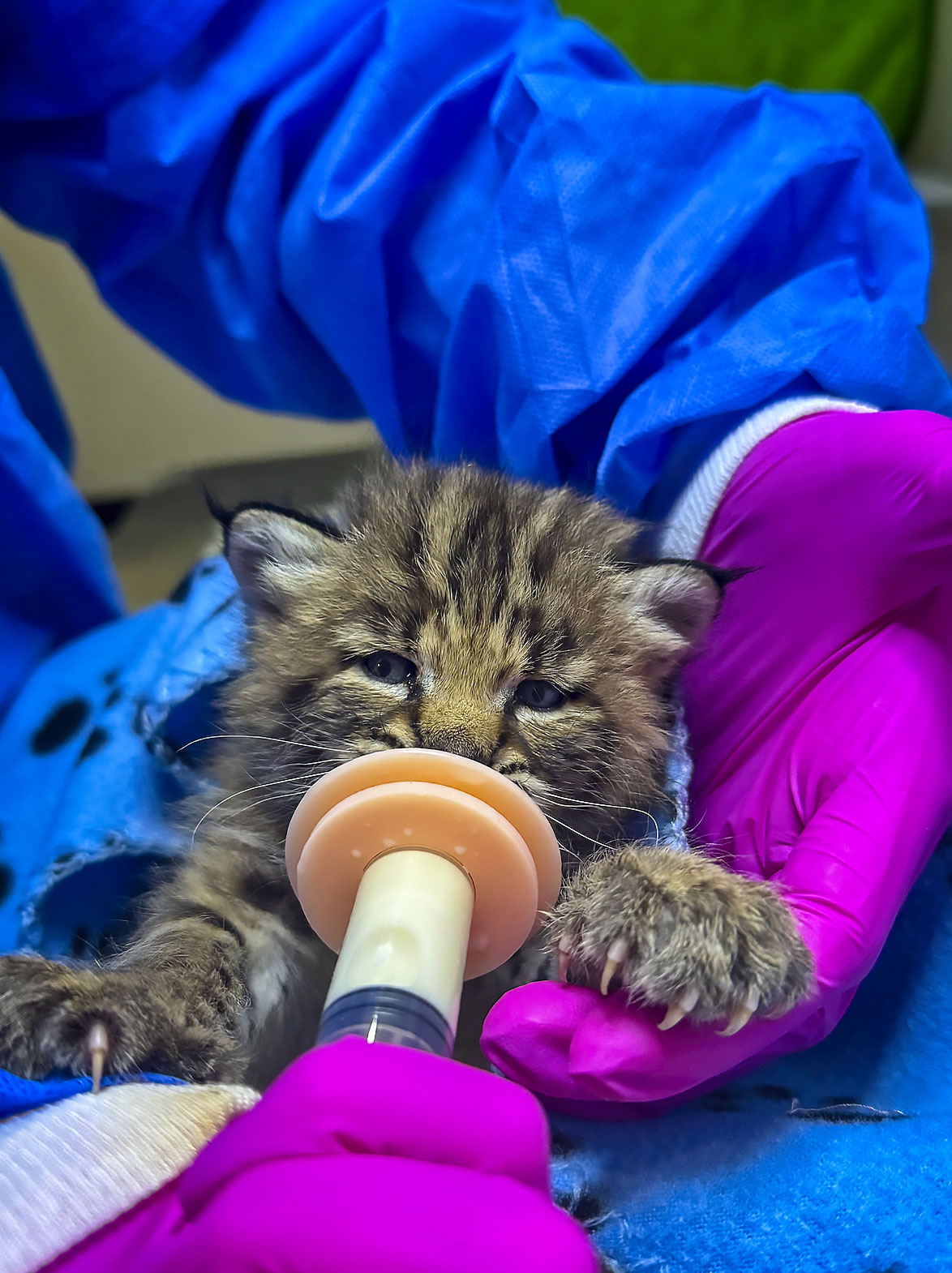
The team at Rocky Mountain Wildlife Alliance is presently caring for two bobcat kittens. Pictured here is the first kitten that arrived in May.
Rocky Mountain Wildlife Alliance (RMWA) in Sedalia is busy year-round with wildlife education and rehabilitation. This year has been especially unique with the warm winter and spring. According to Emily Davenport, RMWA’s executive director and founder, it had—and will continue to have—a noticeable impact on wildlife.
“Warmer temperatures can signal to wildlife that spring has arrived, triggering reproductive activity weeks ahead of normal schedules. While early breeding can sometimes benefit wildlife, it can also create challenges if weather conditions later become unfavorable or food resources are not yet abundant enough to support growing young,” Emily shared.
Castle Pines residents have seen an abundance of bear activity (see bear article on opposite page). “The lack of moisture limited the growth and abundance of many natural food sources that bears depend on so we’re seeing more hungry and inexperienced yearling bears making poor decisions in search of food,” Emily offered.
These choices include coming into neighborhoods, seeking trash and looking for easy meals near people. If dry conditions continue, Emily says we could see increased human-bear conflicts as bears struggle to find enough natural forage.
As we approach late summer and early fall, the commotion remains. Breeding continues well into late summer and at the same time, young animals born earlier in the year are becoming independent and venturing out on their own for the first time, according to Emily.
Fall is also preparation time for winter, so wildlife becomes intent on identifying food, bulking and finding shelter ahead of the cold. This, coupled with bird species preparing for migration, can mean more people encountering wildlife in unexpected places.
Coexistence with wildlife starts with prevention. There are many simple ways residents can reduce human-wildlife conflicts.
Tips to reduce human-wildlife conflict:
- Keep pets supervised and feed indoors
- Secure trash and other attractants
- Avoid unnecessary intervention with young animals
- Give wildlife plenty of space
- If you are unsure if an animal needs help, call RMWA at 720-831-8130.
“Wildlife is simply trying to survive in an increasingly developed landscape. By making a few small adjustments, we can help keep wild animals wild and reduce situations that may ultimately result in animals being injured, relocated or euthanized,” said Emily.
An exciting behind the scenes happening at RMWA right now is rehabilitation of two bobcat kittens. The first came to the center in May—starving, alone and struggling to survive. A second kitten arrived in June giving them the opportunity to grow together. “Watching the two interact has been incredibly rewarding for our staff and volunteers,” smiled Emily.
The two bobcat kittens will have a lengthy rehabilitation before being released next spring.
Residents can support rehabilitation for the bobcats with a donation or get more involved with volunteering or support at RMWA’s annual gala on November 7. Learn more at rmwalliance.org.
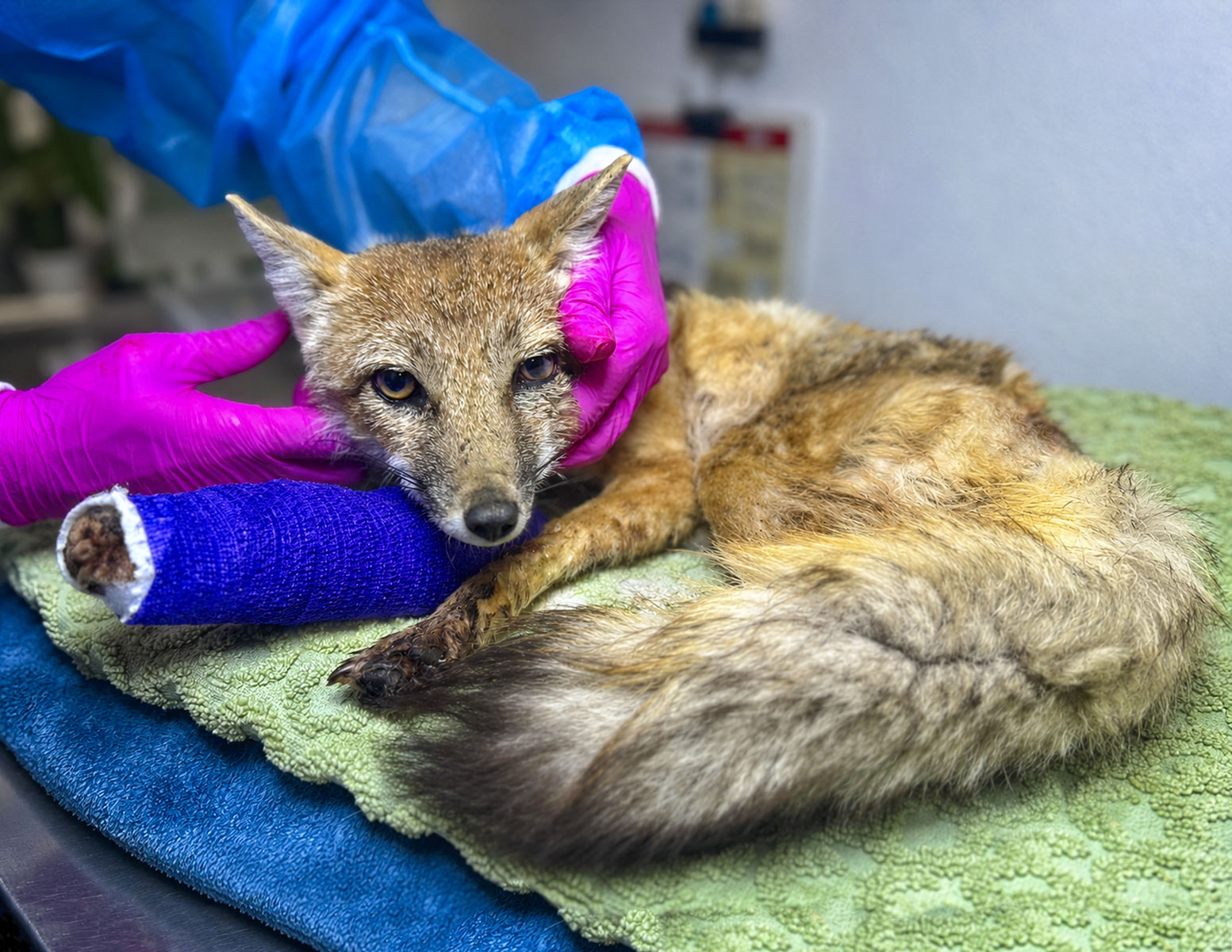
A small fox with a broken ulna and radius (forearm) is held by a volunteer at Rocky Mountain Wildlife Alliance.
By Elean Gersack; photos courtesy of Emily Davenport