Wild Neighbors – The beavers of Castle Rock
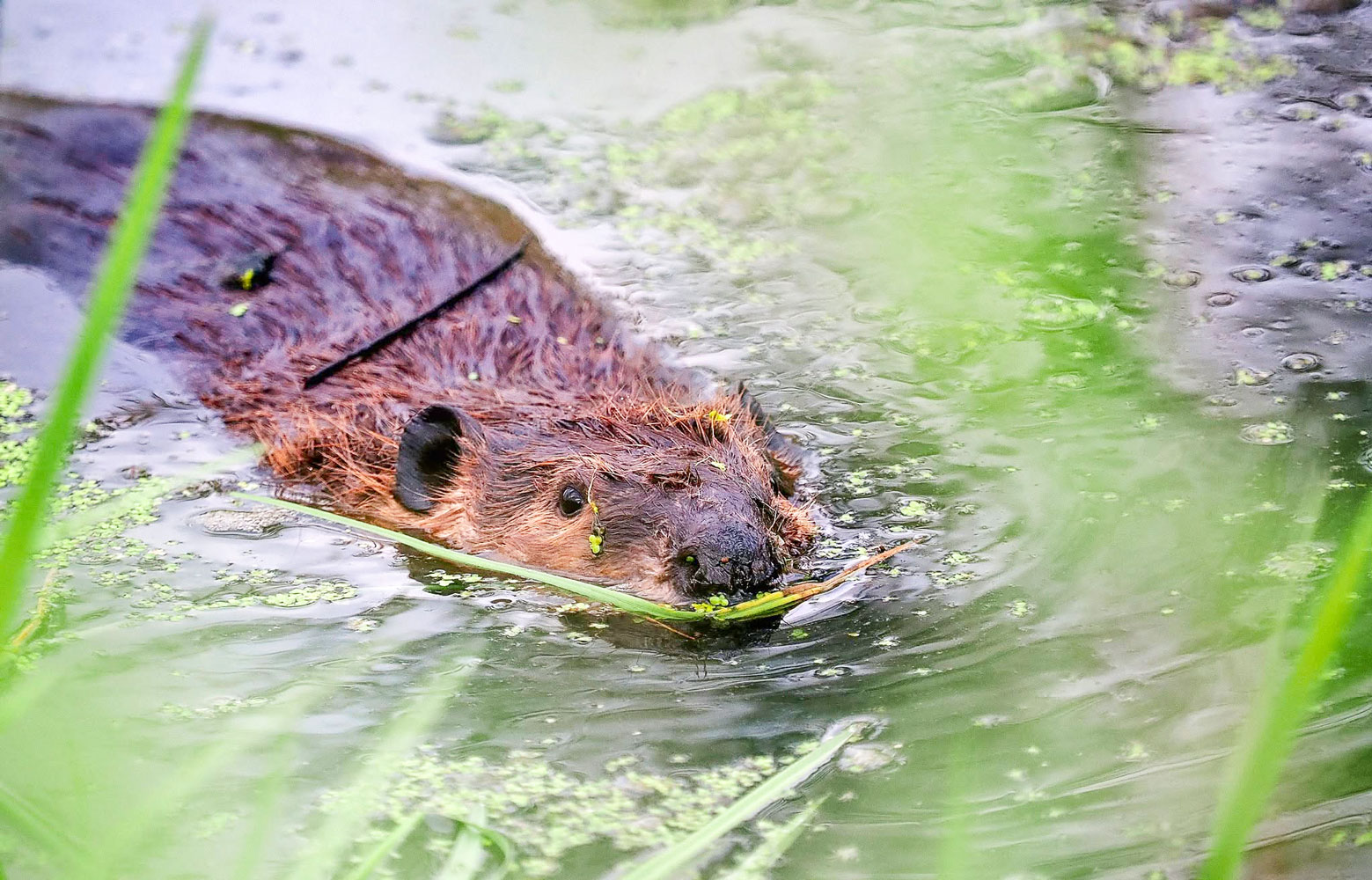
A beaver swims in Sellars Gulch in Castle Rock in May.
A certain unexpected neighbor created a buzz on social media recently. The Village at Castle Pines resident Michael Shorts posted the above photo of a beaver in Sellars Gulch, just upstream from Festival Park in Castle Rock. Many neighbors were surprised the furry critters could be spotted so close to home, starting a conversation about conservation and the important role beavers play in the local ecosystem.
In addition to Sellars Gulch, beavers may be found in East Plum Creek. They are tricky to spot, however, because they are primarily active at night and early morning. Interestingly, in winter, due to constant low light levels within their lodges and under water, beaver activity may become disconnected from the 24-hour daylight cycle, with a beaver “day” becoming 26 to 29 hours long.
At three to four feet in length and weighing up to 70 pounds, beavers are the second-largest rodent (after capybaras). There are only two species of beaver: North American and Eurasian. Beavers have several unique adaptations, including dexterous, hand-like front feet for grasping and digging; webbed back feet that help them swim; and a flat, scaly tail that helps beavers stand on land, steer in the water and store fat for winter. Another unique characteristic is their four long chisel-shaped incisors with a distinctive orange color that comes from iron in the thick enamel.
Beavers have several modes of communication. They slap their tails on the surface of the water to warn of danger; they use vocalizations and body movements to communicate with family members; and they have castor glands they use to deposit scent to mark their territory. Humans have used this “castoreum” in a variety of ways, including as a musky, leathery scent in perfume and as a food additive in various flavorings.
Known for cutting down trees and building dams, this behavior can be surprisingly beneficial to the ecosystem. The culling of trees can result in thicker, bushier growth the next spring. The ponds created by beaver dams can help filter pollutants from the water, prevent erosion, reduce flooding, stabilize the water table and create a new habitat for other wildlife. For this reason, beavers are considered a keystone species. Other wildlife that benefits from beaver ponds include fish, amphibians, turtles, ducks, geese and otters, which live in or near the water. Other mammals, from marmots to moose, benefit by drinking from beaver ponds.
Castle Rock has a program to protect certain native trees from beaver chewing. It involves coating individual trees with a mixture of paint and sand, which prevents gnawing, as beavers do not like the gritty feel of the sand.
For more information visit crgov.com/wildlife.
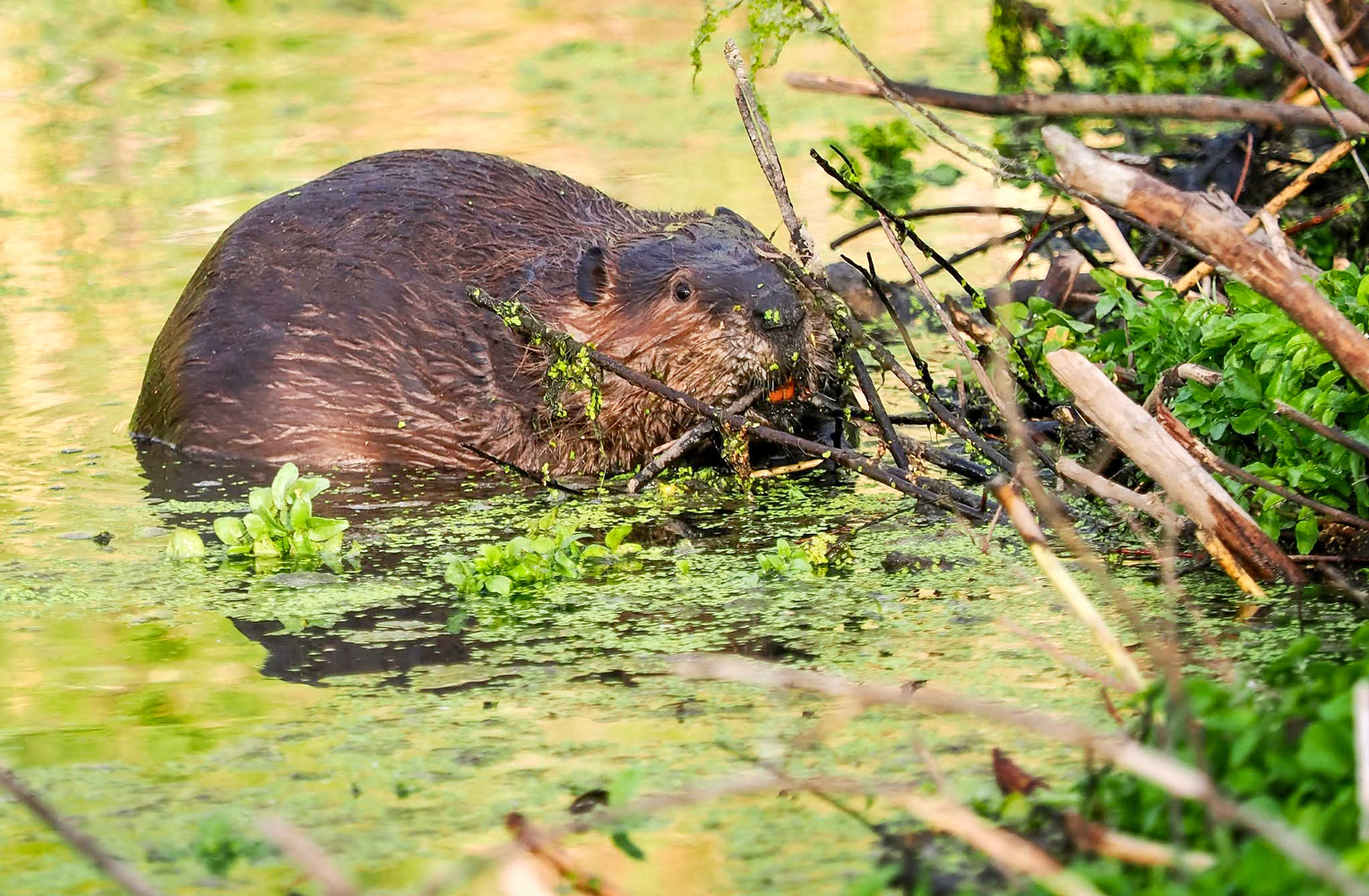
A local beaver maintains his dam. Note the orange incisors.
By Rachel Poe; photos courtesy of Michael Shorts