Colorado living: About the State Capitol
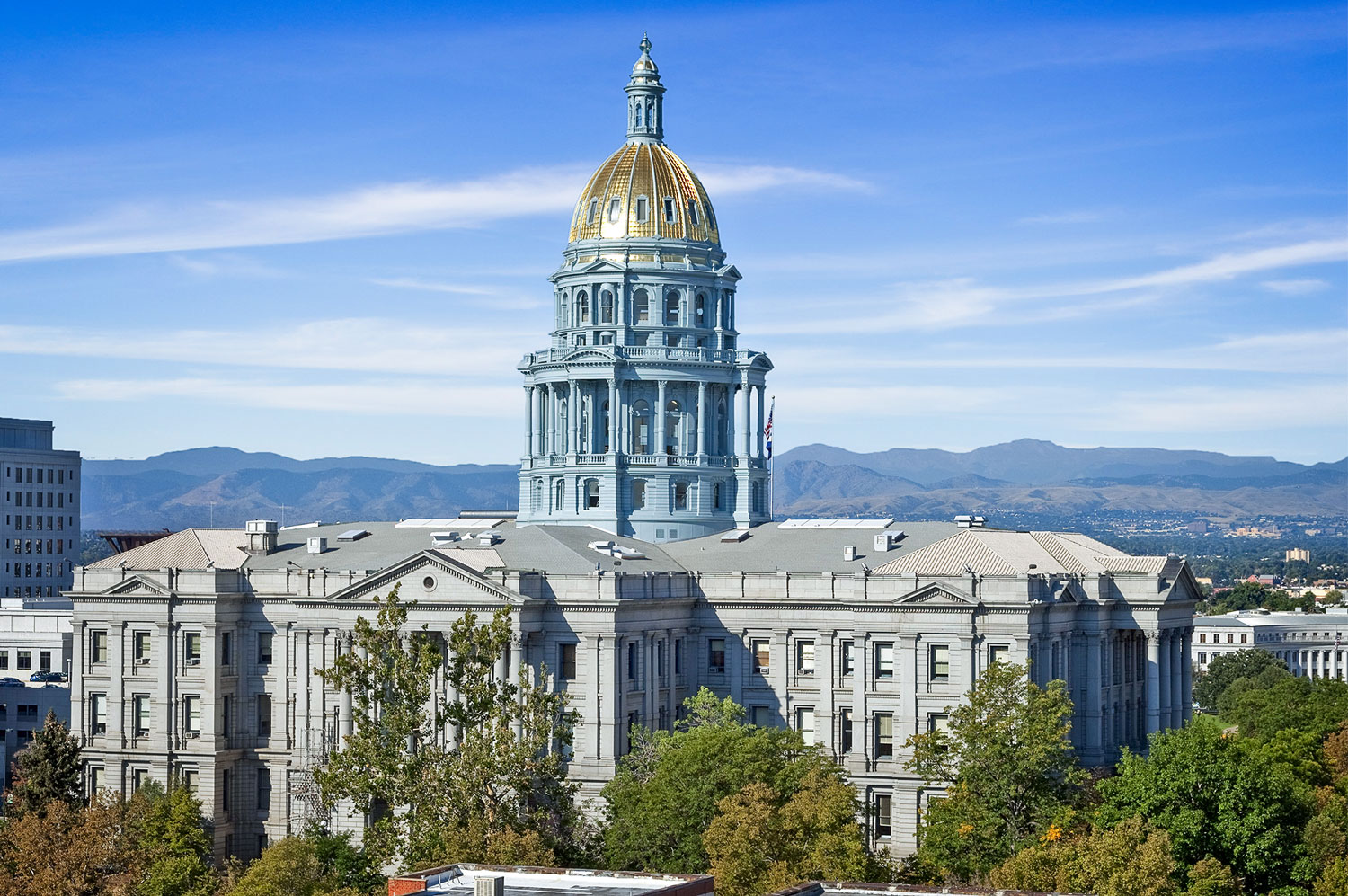
Located at 200 East Colfax Avenue, the Colorado State Capitol is the eastern part of Denver’s Civic Center, which is a National Historic Landmark.
With its brilliant gold dome, Colorado’s State Capitol building is a distinctive sight in downtown Denver. Nearly as old as the state itself, the main part of the building was constructed from 1886 to 1894.
Architect Elijah E. Myers designed it in the form of a Greek cross and it intentionally resembles the United States Capitol in Washington, D.C. Here are some more fascinating facts about the State Capitol:
• The Capitol building has two domes: the gilded one seen from the outside and the rotunda dome seen inside.
• The dome structure is cast iron from the third-floor roof up.
• Completed in 1908, the outside dome was originally copper. To commemorate Colorado’s Gold Rush, the copper sheets were covered with gold leaf from a Colorado mine.
• During a recent restoration project (2012-2014), it took roughly 65 ounces of 99.9% pure gold to re-gild the dome in sheets about as thick as a strand of hair. The gold came from the Cripple Creek/Victor area in Teller County.
• Many of the Capitol’s windows are stained glass. They depict people and events related to the state’s history.
• Portraits of the presidents of the United States and other artwork decorate the third-floor rotunda.
• The Capitol sits slightly higher than its immediate surroundings and is 272 feet tall. The main entrance hall is open to the rotunda dome which is 181 feet overhead.
• Much of the material used in the building’s construction came from Colorado. The exterior white granite came from Gunnison County. Yule marble, also from Gunnison County, covers the floors. Colorado Rose Onyx, also called Beulah Red, is a rare rose marble from Pueblo County that adorns the building’s interior. Only found in Colorado, that stone is believed to be all that exists.
• The building houses the State Senate and House of Representatives, the Treasury Department and the offices of the Governor and Lieutenant Governor.
• In 2013, the Colorado Capitol became the first state capitol in the country to be cooled via a geothermal system. Utilizing two 850-foot wells, water at a constant 65 degrees is pumped up from one well, channeled through a heat exchanger, and returned to the aquifer through the second well, providing cooling in the process.
• The official mile-high elevation of Denver is marked on the Capitol’s outside west steps. Several markers indicate measurements taken at various times, as the means of measuring became more accurate with modern technology. The words “One Mile Above Sea Level” mark the 15th step, measured in 1909. In 1969, a marker was placed in the 18th step according to a new elevation survey by students from Colorado State University. In 2003, a more accurate measurement resulted in a marker in the 13th step. And finally, this year, the latest technology has identified the 17th step as the mile-high point, with a marker planned for 2027.
To learn more, visit these three sites: capitol.colorado.gov, content.leg.colorado.gov/Visit-Learn, and coloradoencyclopedia.org/article/colorado-state-capitol.
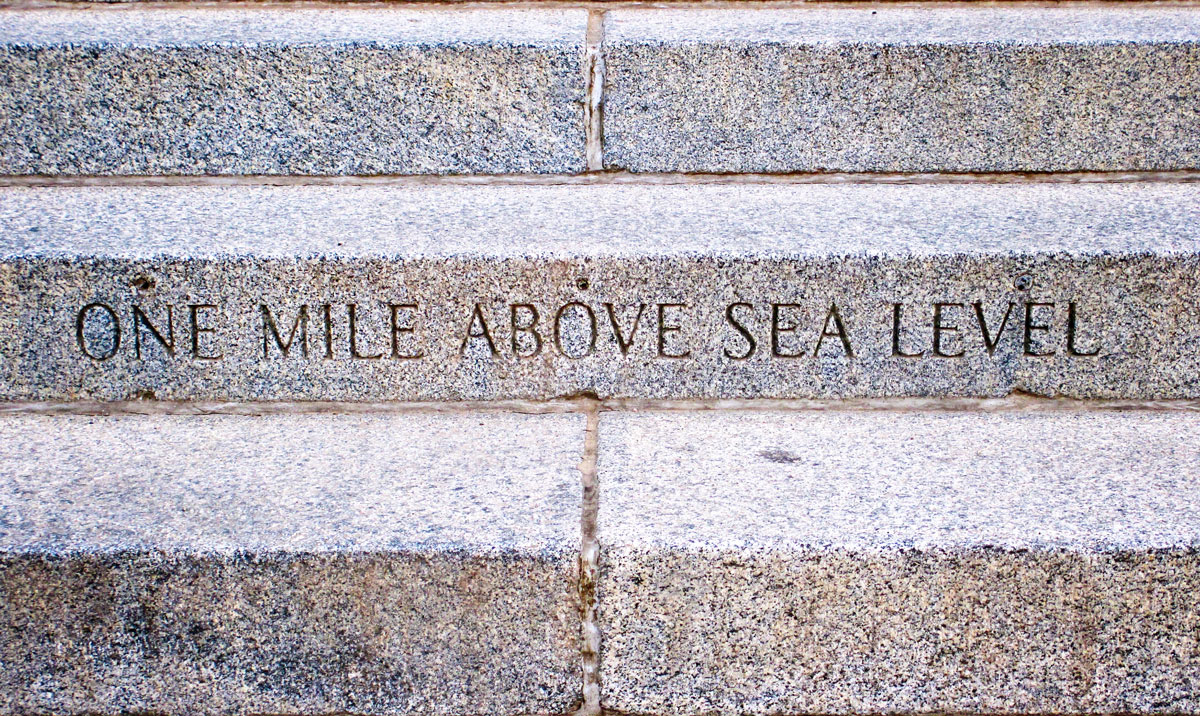
Denver’s mile-high elevation is marked on the capitol building’s western steps.
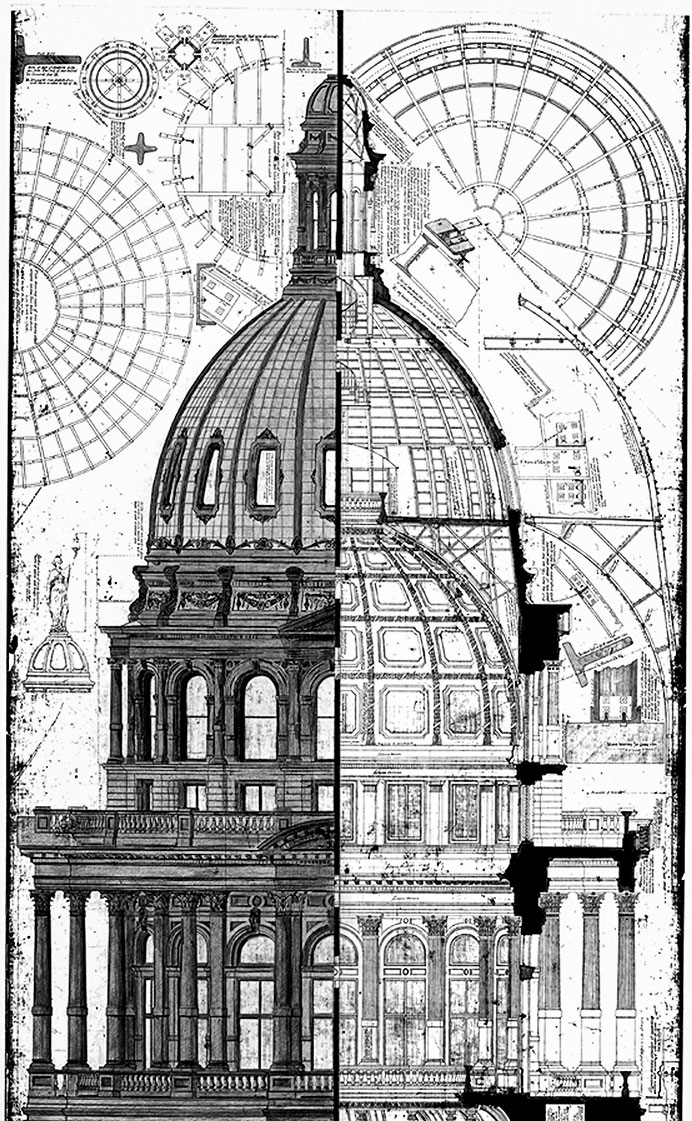
An architectural drawing shows the capitol building’s exterior, with a cutaway section clearly showing its two domes.
By Susan Helton; courtesy photos