Deckers: A river runs through it

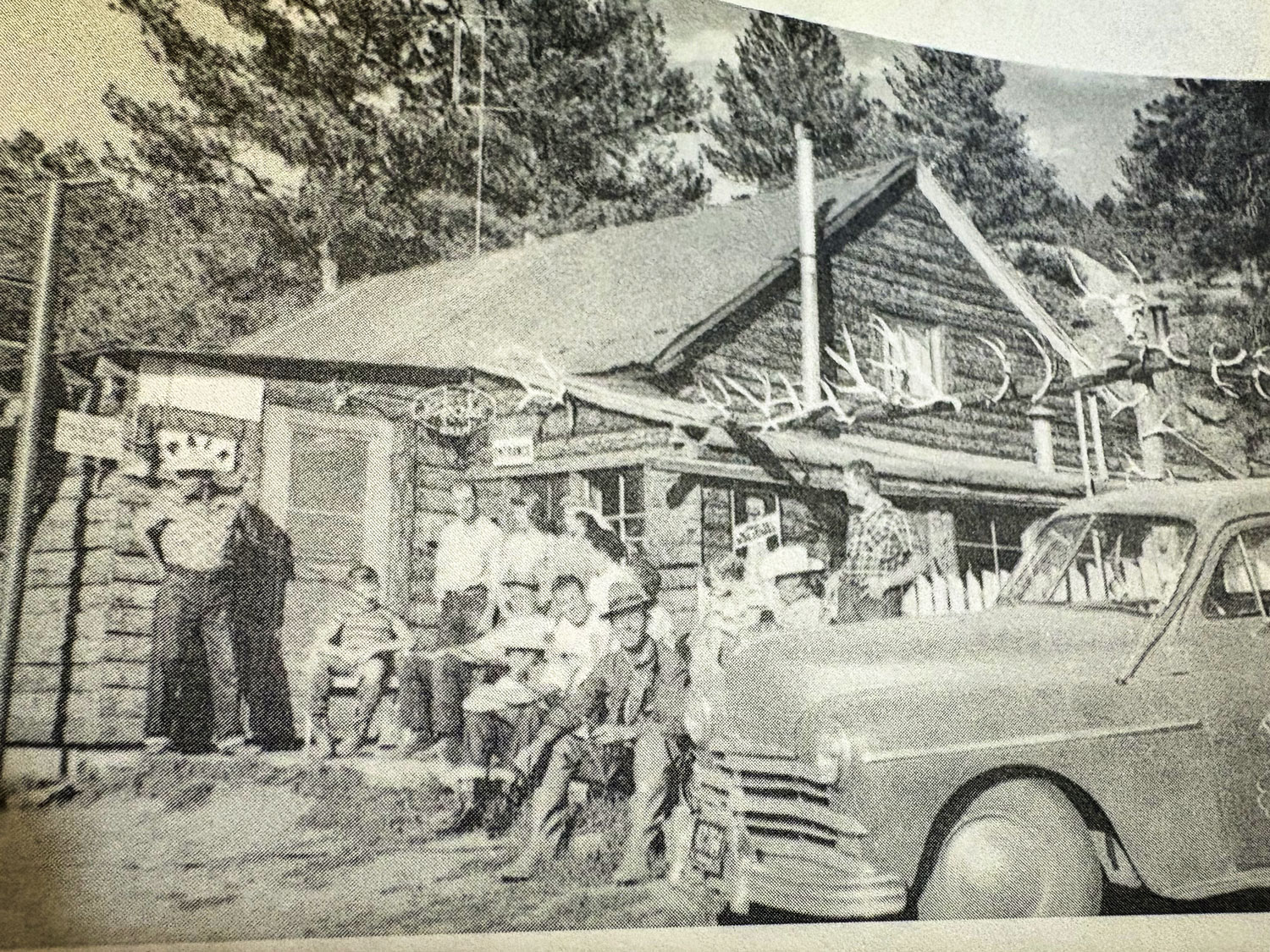
The Twin Cedars Lodge was also a popular fishing spot circa 1950s, by Mack Sorn, courtesy Denver Local History Collection.
Discovering natural beauty for the first time always inspires. Consider the upper South Platte River Valley. If names like Trumbull, Nighthawk, Twin Cedars, Ox Yoke (once home to Governor Elias M. Ammons) and Deckers do not fire up your curiosity, there is a whole lot more in the scenery getting there via State Highway 67 (SH-67) from Sedalia.
The South Platte River was an early access point for pioneers into roadless Colorado. Besides convenience, entrepreneurs sought to exploit its rich timberlands, gold and fishing waters. It was not until Stephen Decker arrived in 1890 that its real value was fully disclosed.
Since hauling timber from anywhere is no easy day, especially with no roads, and with an estimated 200,000 board feet of lumber shipped out of the area in 1879, more and better access was needed. Brothers Jerry and John Mouat did something about it, building Sugar Creek Road, today a piece of SH-67.
Though Army Captain George Tyler gave the region pause with his optimistic hopes for monetizable gold deposits between Trout and West Creeks, things never did “pan out.” Even so, the mere rumors brought the prospectors to that part of the South Platte Valley. In the process, Stephen Decker saw his own golden opportunity: chasing a fortune by selling water issuing from his springs in Trumbull. By 1896, he found another profitable way to slake the miners’ thirst: opening a saloon in a spot on the river called Daffodil (renamed Deckers in the 1920s). A post office and general store followed.
Once the gold fever died with the absence of any meaningful discoveries, Decker’s Mineral Springs and Resort became Decker’s tourism mother lode. Although the resort no longer exists, Deckers is still considered the best spot for trout fishing in Colorado.
But Decker did not have a monopoly on the tourist trade. Just north of the juncture of the South Platte River and base of Nighthawk Hill, one enterprising Owen Martin, son of a Civil War veteran named Enock, saw his opportunity as well. Beginning with a log cabin, then a fisherman’s cabin, Owen turned his homestead claim into what came to be known as the O.J. Martin Place. A swinging cable bridge allowed his later guests access to better fishing holes on the west side of the river.
As the Martin fishing cabin grew and was passed on, it came to relative Don Simeth who improved and expanded it, calling it Twin Cedars Lodge. Popular for some 40 years, Twin Cedars became a casualty of a deliberate fire reportedly set by locals who, fearing discovery of their drugs secreted in the building, burned it down.
Other notable sites in the Deckers area are the Ramparts Range Road, built during the Great Depression to connect SH-67 west of Sedalia and Deckers with the Woodland Park area near Colorado Springs. Another longtime landmark is the redoubtable Sprucewood Inn, built in the 1950s and is today a popular stop for tourists.
To be unfamiliar with Deckers and the beautiful route along SH-67 is to miss a fascinating chunk of Douglas County. Next month, we will take you along its full length with additional, colorful history.
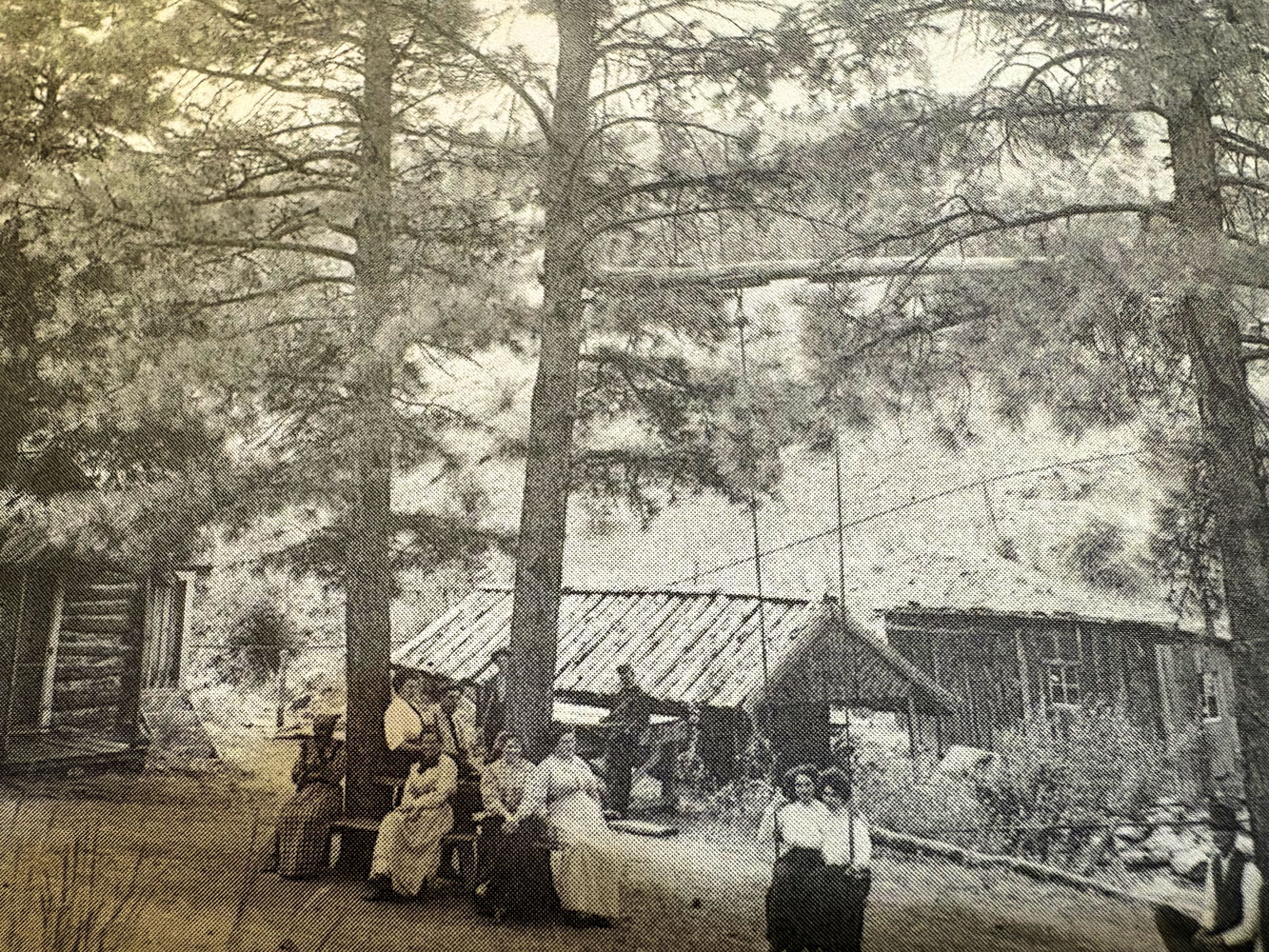
Deckers Mineral Springs and Resort was a tourism hotspot for fisherman and travelers. Circa 1905, by L.C. McClure, Denver Public Library.
By Joe Gschwendtner; courtesy photos