Painted lawns and water conservation
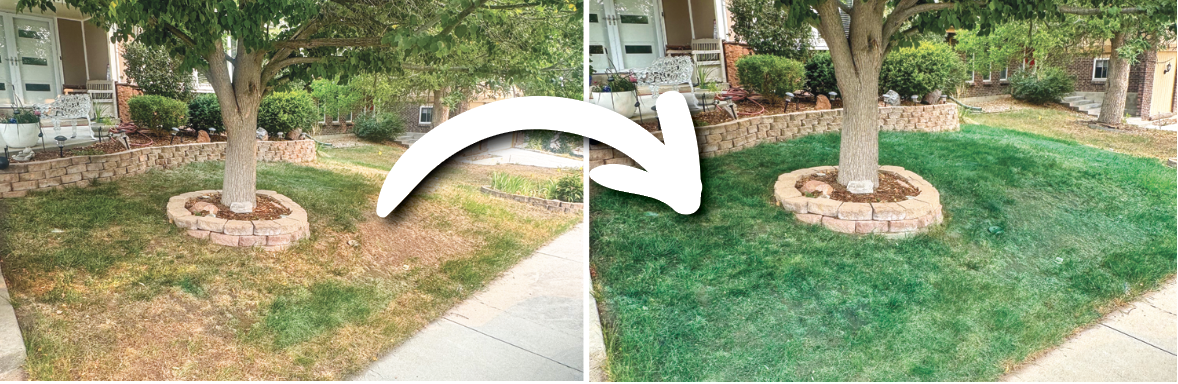
Before and after lawn painting, an alternative to excessive watering during drought conditions.
This summer’s pervasive heat and drought-driven water restrictions have left a number of local lawns looking worse for wear. Some residents are considering popular solutions to brown turf, including replacing lawns with native plant xeriscaping or with artificial grass (a pricey solution, even if HOAs allow). Yet a relatively new approach has arrived on the brown grass scene—painting distressed or dormant grass.
The practice has long been a staple of athletic fields and golf courses, and it is becoming increasingly popular in residential and commercial applications. Commonly thought of as painting, the practice actually involves dyeing grass with a non-toxic organic solution, typically vegetable or mineral based. It does not inhibit photosynthesis and growth in grass, and it can provide the look many homeowners covet, said Rob Peterson, owner of Paint Denver, a company specializing in painting lawns. He likens it to “sunscreen for your grass.”
“I appreciate the limited resource of water we have,” Rob said. “This is a way to maintain an aesthetic that a lot of Americans want and to be water conscious at the same time.”
The practice can help homeowners save money on water bills while complying with water restrictions. Cost depends on the size of the painted area, but application on a small front yard usually runs about $300. Once it dries (a few hours), rain or watering will not wash it away. Applications last two to three months.
Painted turf can thrive when watered deeply once a week, allowing roots to grow deeper, he said. Rob views part of his mission and growing his business as engaging homeowners about how to best care for their lawns.
“There’s an education that goes along with creating the market,” he said. “I hope people use painting in combination with smarter watering.”
While painting can solve a short-term brown grass problem, Nathan Travis, district manager for the Castle Pines North Metro District, said, “our strong preference is trying to get high-water use plant materials out of the ground. Painting could be an interim step to keep your lawn looking nice, but long term what’s going to be better for sustainability, for water resources, is more of a shift toward Colorado native plant species.” He added that native plants are better for pollinators, the environment and for soil stabilization. “There are so many benefits beyond water conservation,” he added.
Increased incentives (rebates of up to $3 per square foot of turf replaced) encourage a shift to native plants.
Yet sometimes painted turf makes aesthetic and financial sense, Rob said. He has worked with real estate agents looking to boost curb appeal before putting a property on the market, as well as commercial property owners with large swaths of grass that cannot keep up with water restrictions. “We bridge the gap between wanting grass to look good and being water aware.”
By Ken McConnellogue; photos courtesy of Paint Denver