iNaturalist: An app for science and conservation

iNaturalist is a nonprofit organization with a free app and social network that helps users identify local plants and animals while generating data for science and conservation. Their vision is “a world where everyone can understand and sustain biodiversity through the practice of observing wild organisms and sharing information about them.”
Anyone can upload their personal observations to iNaturalist. An observation is defined as “an encounter with an individual organism at a particular time and location.” This includes signs of organisms like tracks, nests or remains of expired organisms. When these observations are submitted, they may include: who you are, where you saw it, what you saw, when you saw it and evidence, such as a photo or sound recording. If all of that information is included, an individual observation may be verified by the iNaturalist community and considered Research Grade. This Research Grade data can be used by researchers and may appear in scientific publications. Observations that do not make the grade are considered casual observations and are retained for personal and less formal use.
In addition to adding observations, users can write journal entries, connect with other users and contribute to the science by helping to verify other people’s observations.
iNaturalist began in 2008 as a student’s final project working toward a masters degree. The mobile app was launched in 2011. In March 2026, iNaturalist surpassed 300 million total observations. So far, more than 7,000 scientific publications have made use of its data and more than 500,000 species have been identified by more than 4.1 million users worldwide.
As of May 2026, in Castle Pines alone, 3,500 observations have been logged on 900 species. The most popular species are the red-tailed hawk, western terrestrial garter snake, mule deer, wild turkey and Gambel oak. Among the most rare local observations are the Glover’s silkmoth and wild bergamot wildflowers.
This year, Colorado Parks and Wildlife would like you to be involved in Otter Y.E.A.R. (see related story on page 16). Download the iNaturalist app or create an account at iNaturalist.com and join the “Colorado’s Otter Y.E.A.R.” project for your otter observations to contribute to the understanding of Colorado’s current otter population.
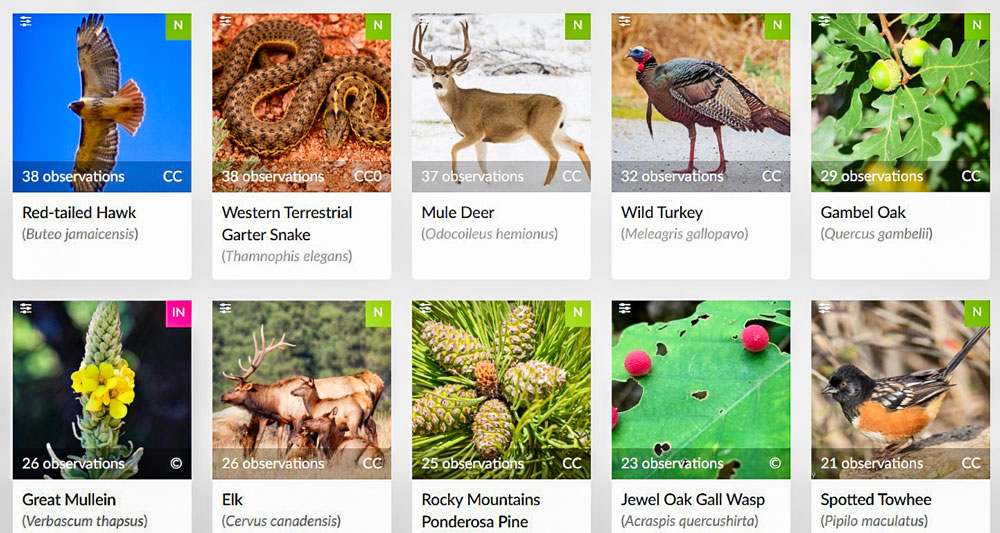
The top ten most iNaturalist-observed species in Castle Pines.
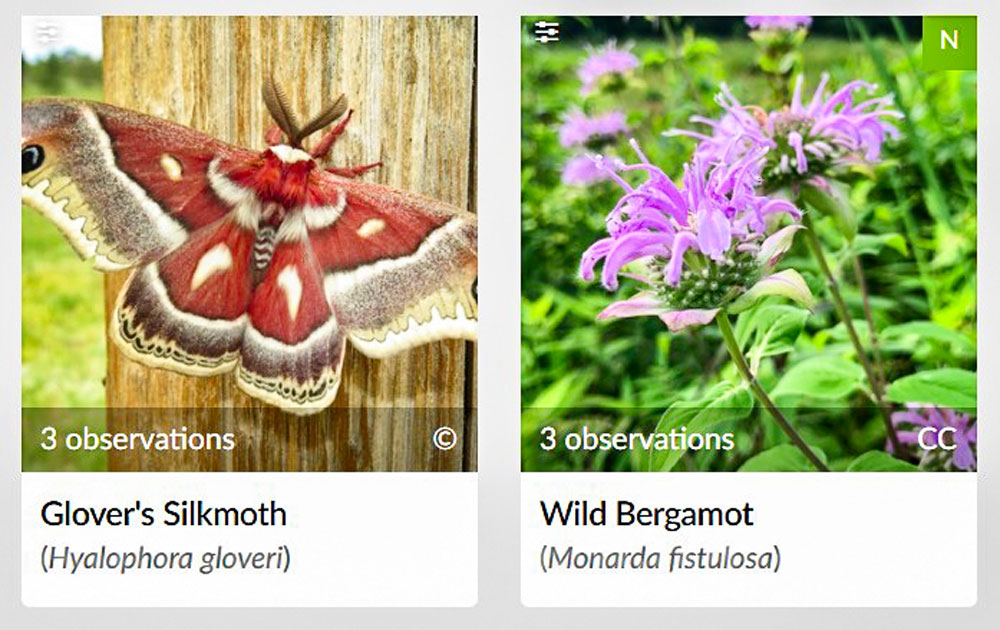
Rare iNaturalist-observed species in Castle Pines.
By Rachel Poe; photos courtesy of iNaturalist